Small Apartment Storage Ideas That Actually Work: 23 Smart Solutions for Every Room
Maximize storage in a small apartment without clutter. 23 smart solutions for closets, kitchens, under-bed storage, vertical systems, hidden furniture, rentals, and studios, with measurements and a printable checklist.
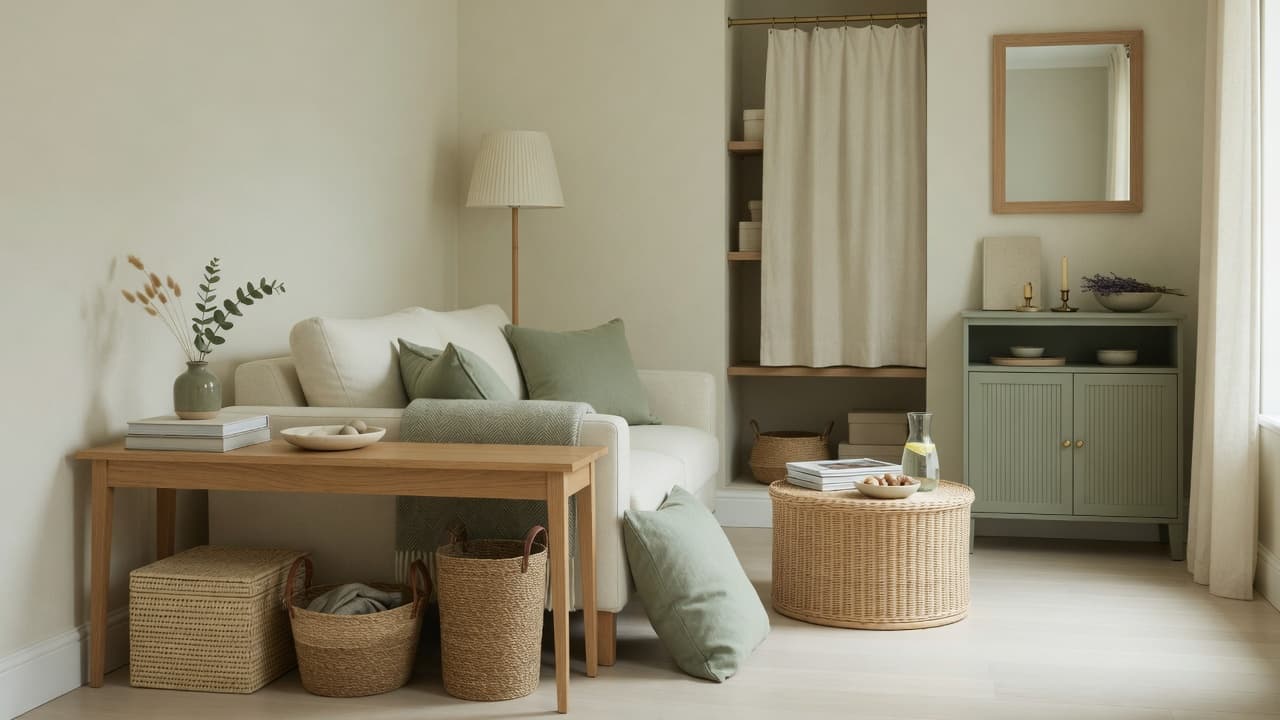
More storage is not the same as more stuff. In a small apartment, the win is capacity you can maintain without making rooms look like a warehouse. Professional organizers do not start with pretty bins. They start with volume, categories, zones, and habits.
This guide shares 23 small apartment storage ideas that actually work, room by room, with measurements, rental-friendly options, studio tactics, and a printable checklist. The goal is simple: store more of what you need, display less of what you do not, and keep the home calm.
Educate your systems first. Shop second.
Storage planning fundamentals
Before you buy a single container, answer four questions:
- What categories live here? (clothes, kitchen tools, papers, cleaning, seasonal)
- How often do I use each item? Daily, weekly, rare
- Where do I use it? Store near the point of use
- What can leave? Donate, recycle, or discard first
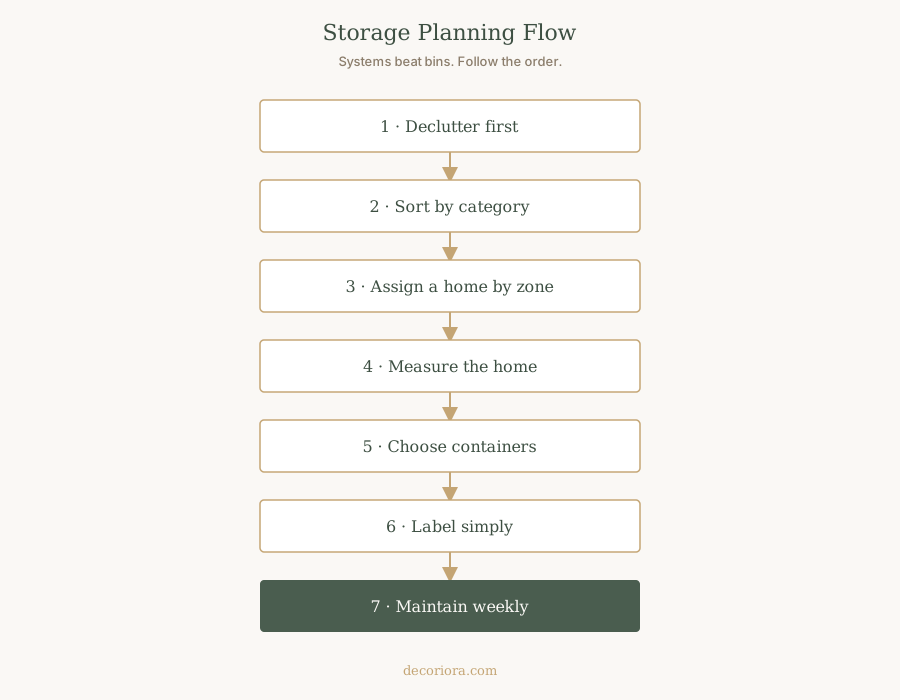
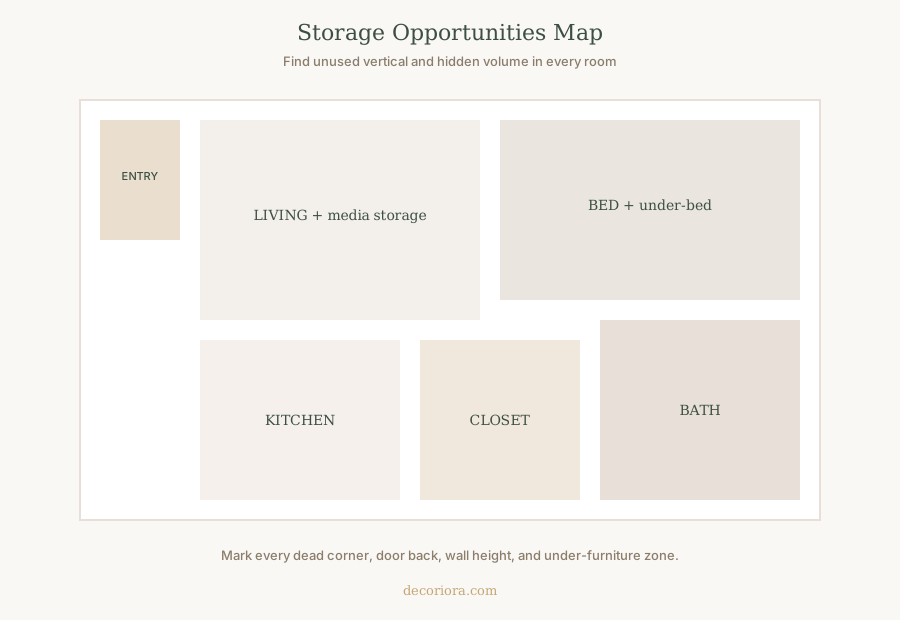
Successful home organization is about systems that are easy to maintain, not a one-time makeover. If a setup only works on Sunday night photos, it will fail by Wednesday.
Solution 1. Declutter before you organize
Why it works: Organizing items you do not use is expensive storage theater.
Do this first:
- Pull one category (for example, mugs or tees)
- Keep only what you use and love
- Exit the rest the same day if possible
- Then measure the remaining pile for containers
For a focused weekend method, use The Weekend Declutter Blueprint. For a full compact-home system, the Small Apartment Organization Bible goes room by room.
Solution 2. Sort by category, then assign a home
Why it works: Random piles return. Categories with homes reset faster.
Group like with like: batteries with batteries, sheets with sheets, bags with bags. Then assign one primary home per category. Secondary "overflow" spots create forgotten duplicates.
Solution 3. Store by frequency of use
Why it works: Daily items should live between roughly knee and eye height. Rare items can go high or low.
| Frequency | Best location |
|---|---|
| Daily | Easy reach, open or one-step access |
| Weekly | Cabinet or mid shelf |
| Seasonal / rare | Top shelf, under bed, high closet |
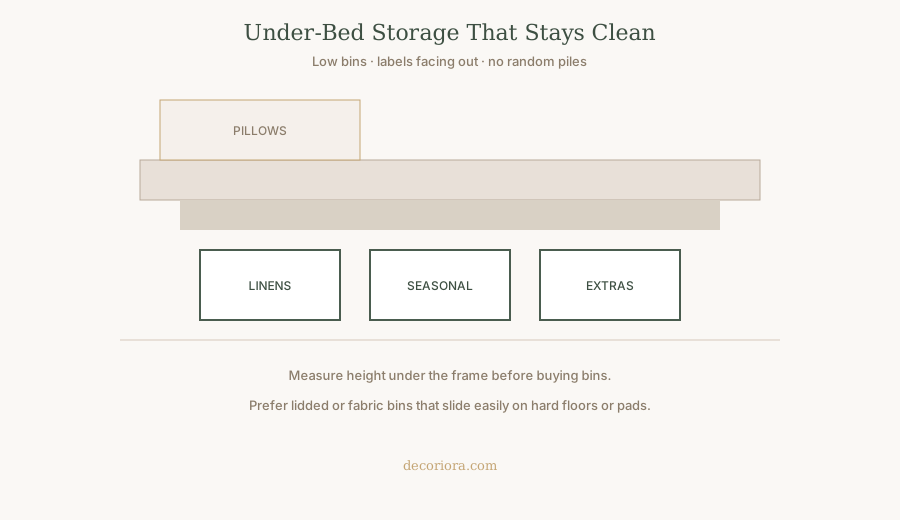
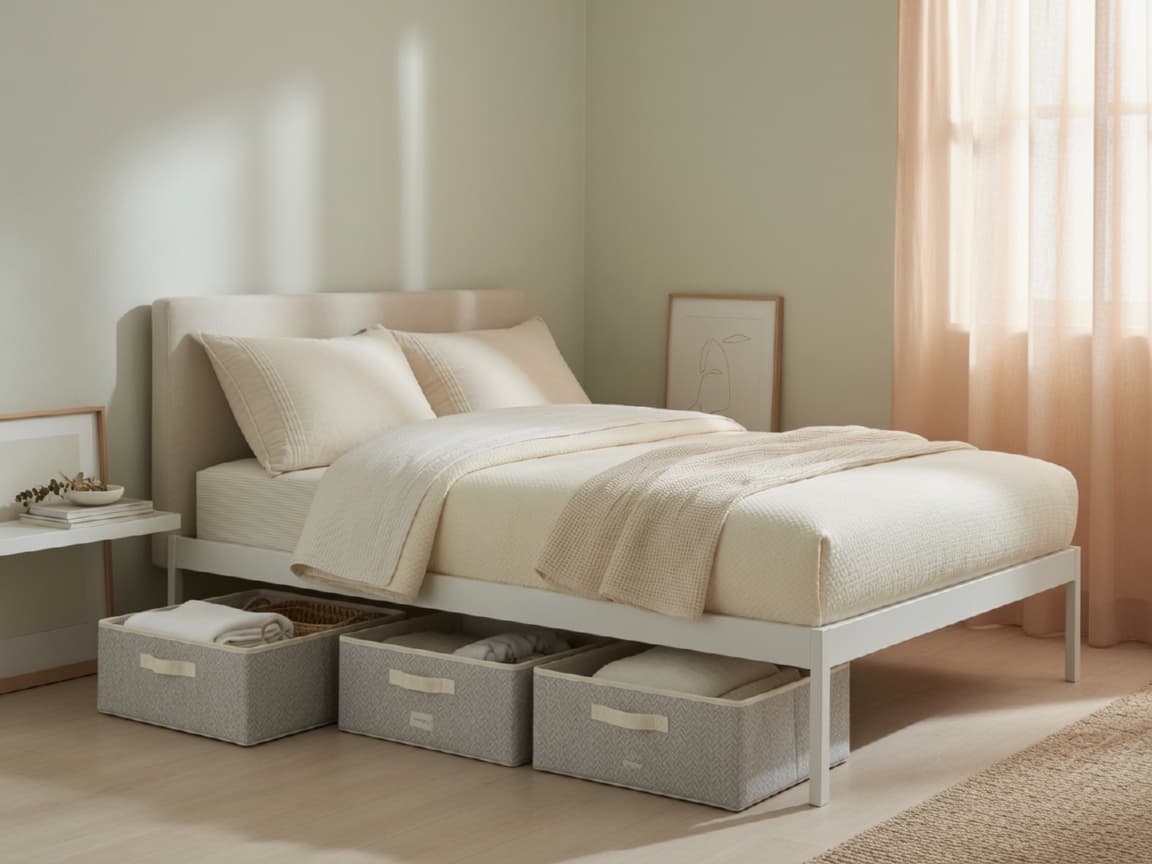
Solution 4. Under-bed storage that stays clean
Why it works: Under-bed volume is free square footage if you contain it.
How to do it well:
- Measure clearance under the frame before buying
- Use low lidded or fabric bins that slide
- Face labels outward
- Store linens, seasonal clothes, or spare bedding, not random junk
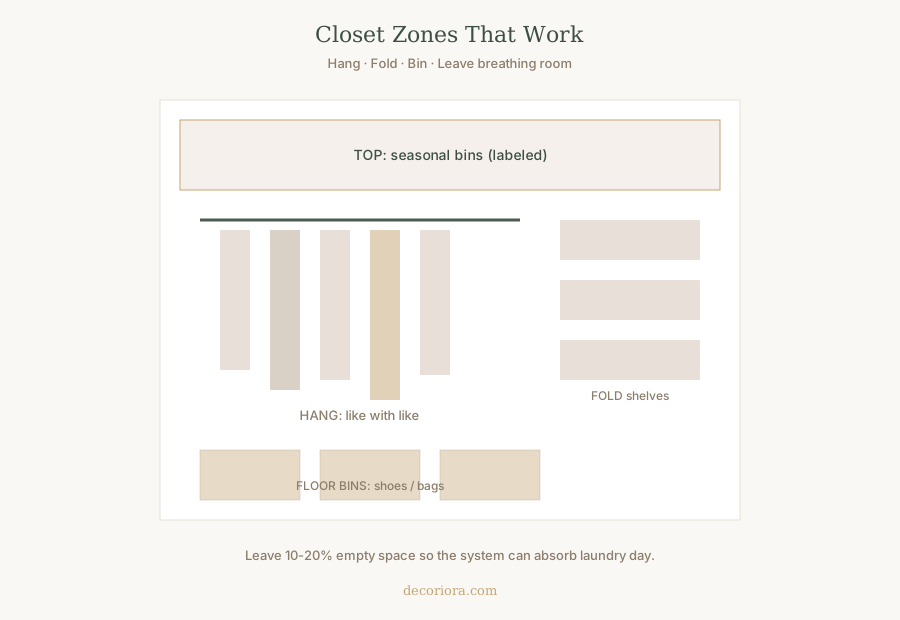
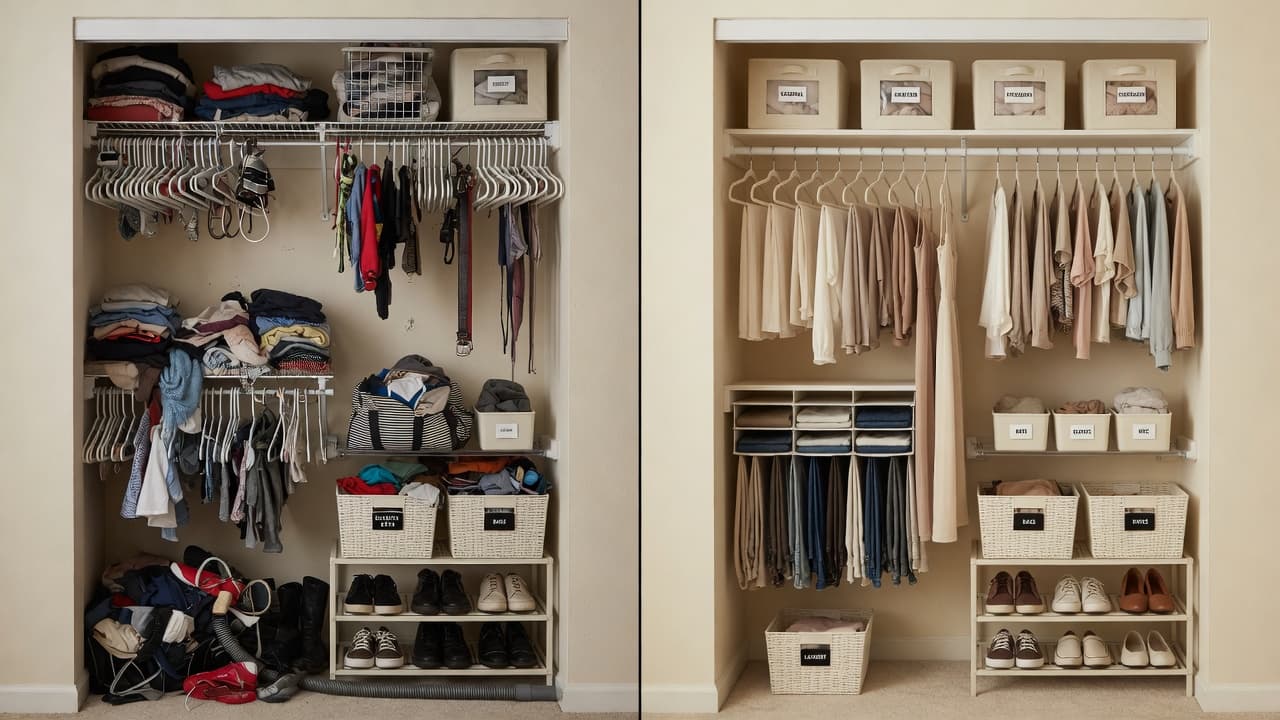
Solution 5. Closet zones: hang, fold, bin
Why it works: Closets fail when everything is mixed. Zones create automatic homes.
Simple closet map:
- Hang: like with like (shirts, pants, dresses)
- Fold shelves: sweaters, tees, jeans if you prefer folds
- Top shelf: labeled seasonal bins
- Floor: shoes or bag bins only (not a dumping ground)
Leave 10 to 20% empty space so laundry day does not explode the system.
Solution 6. Kitchen storage by task zones
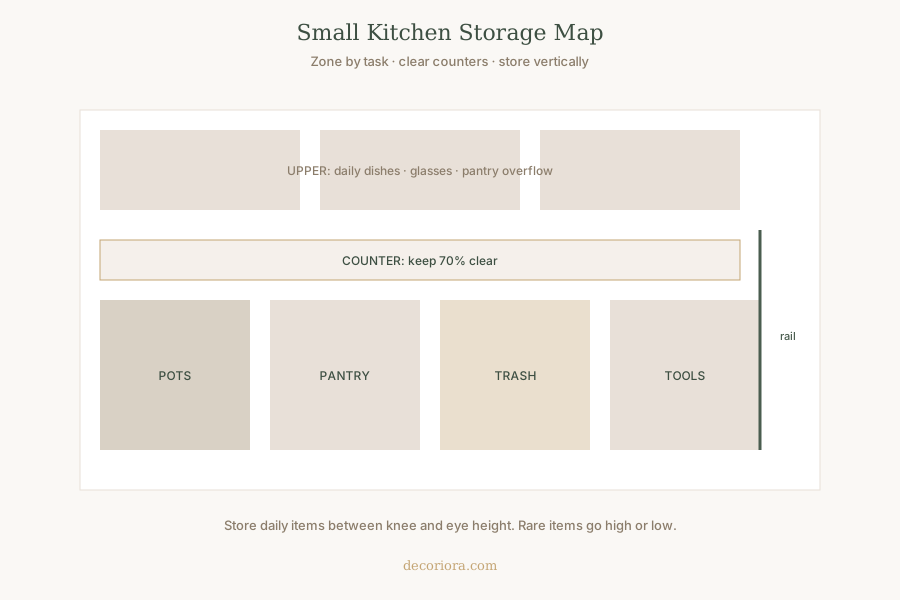
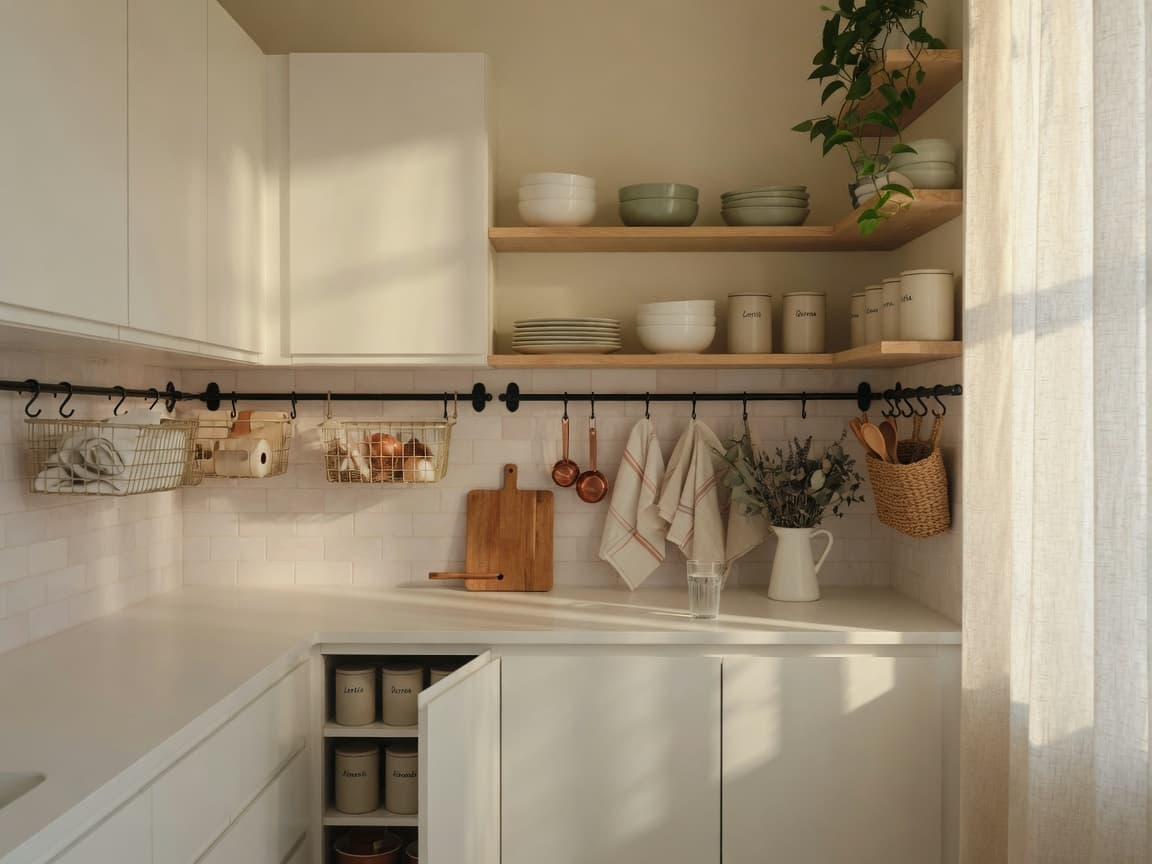
Why it works: Kitchens feel small when counters become storage.
Map zones:
- Prep near cutting boards and knives
- Cook near pots, oils, and utensils
- Serve near plates and glasses
- Clean near sink and trash
Keep about 70% of counters clear. Daily tools can live on a rail or in a crock; backups go away.
Solution 7. Pantry organization (even without a pantry)
Why it works: Food chaos creates waste and visual noise.
Tactics:
- Group by category (breakfast, snacks, cans, baking)
- Use turntables or bins in deep cabinets
- Decant only if you will maintain it
- Label simply
- First-in, first-out for perishables
A freestanding shelf or slim rolling cart can act as a pantry in studios.
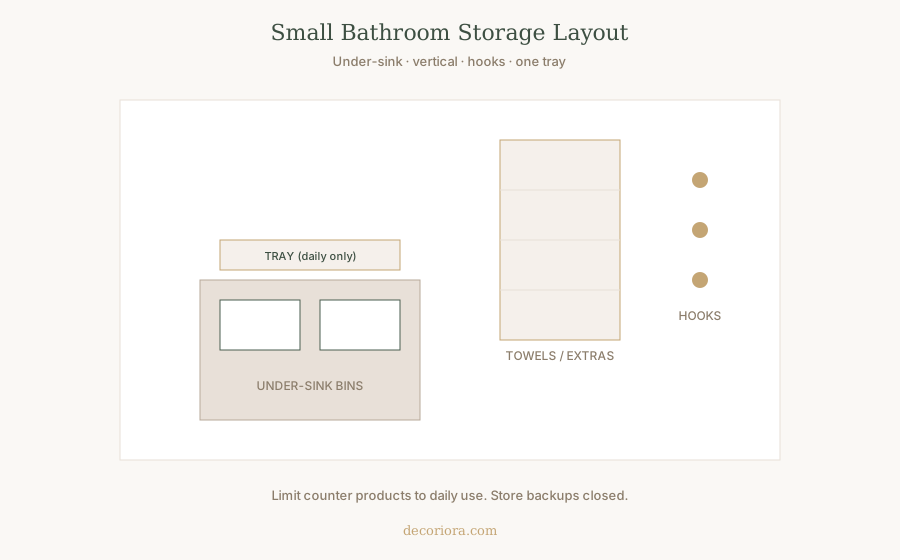
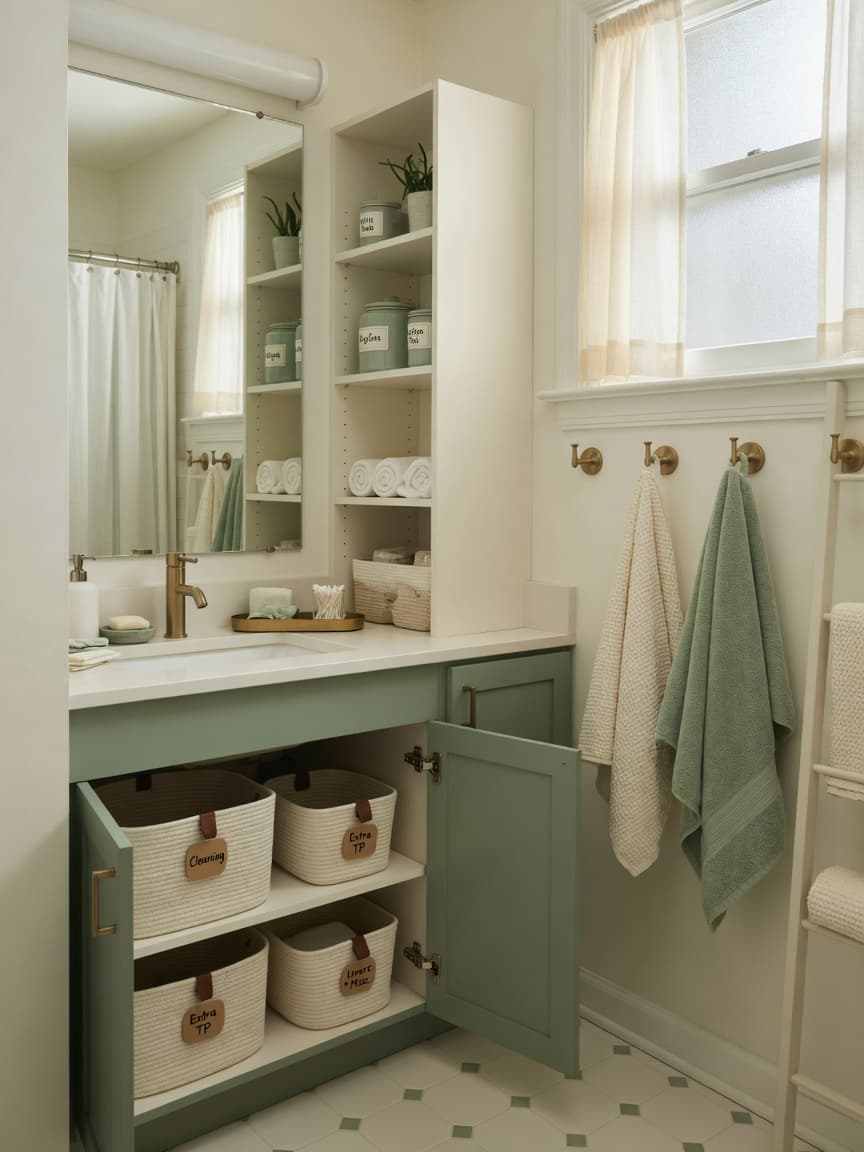
Solution 8. Bathroom storage with a clear counter
Why it works: Bathrooms look smaller when products colonize every inch.
System:
- Under-sink bins for backups and cleaning
- Hooks for towels and robes
- One tray for daily products only
- Vertical shelf for extras if space allows
Solution 9. Laundry storage that fits a closet or corner
Why it works: Laundry mess spreads into bedrooms and living rooms.
Ideas:
- Vertical sorter (dirty / delicate / dry clean if needed)
- One caddy for detergent and supplies
- Fold zone: a cart top or clear section of counter
- Hang rod for air-dry items if allowed
If laundry is shared in the building, a tote that travels keeps supplies together.
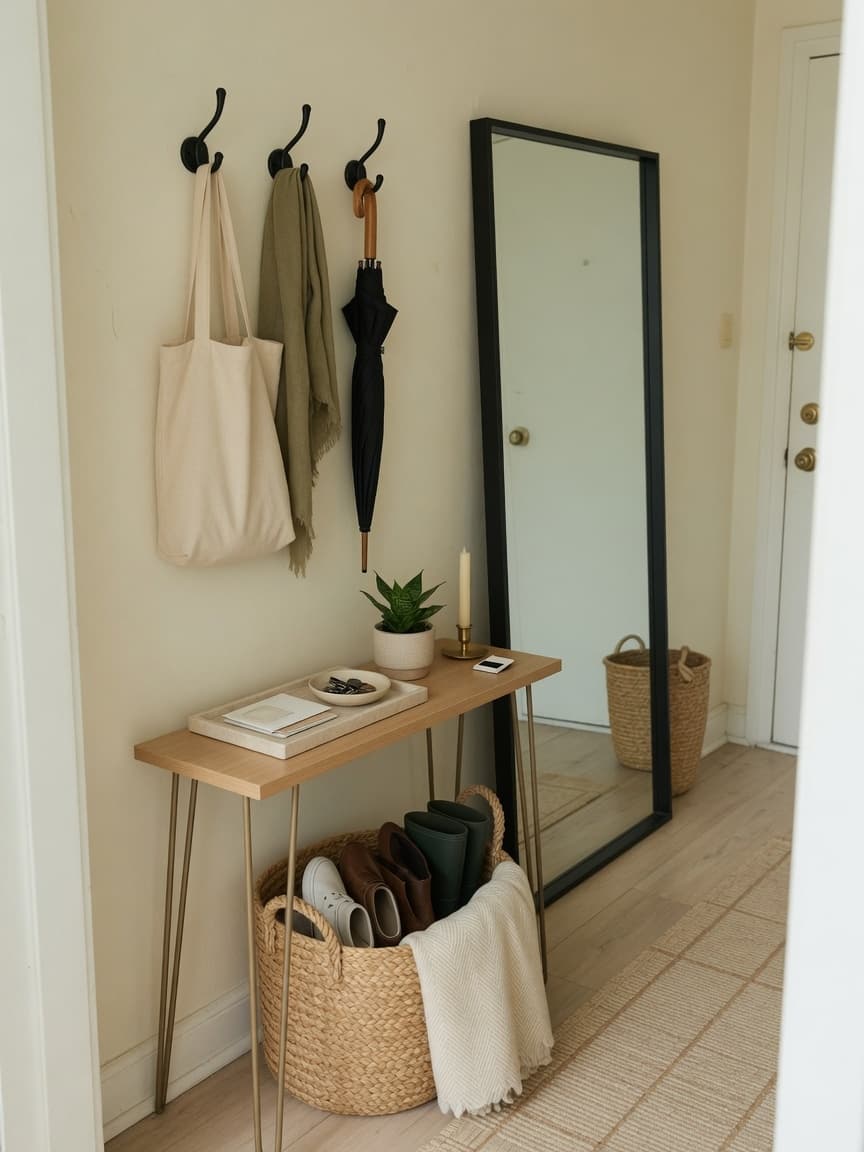
Solution 10. Entryway organization that stops the drop zone
Why it works: The entry decides whether clutter enters the home.
Minimum entry kit:
- Hooks at adult (and kid) height if needed
- Tray for keys and wallet
- Basket or rack for shoes (limit pairs at the door)
- Optional slim console with a hidden bin
Solution 11. Living room storage that still looks styled
Why it works: Living rooms fail when remotes, cables, and toys stay visible.
Prefer:
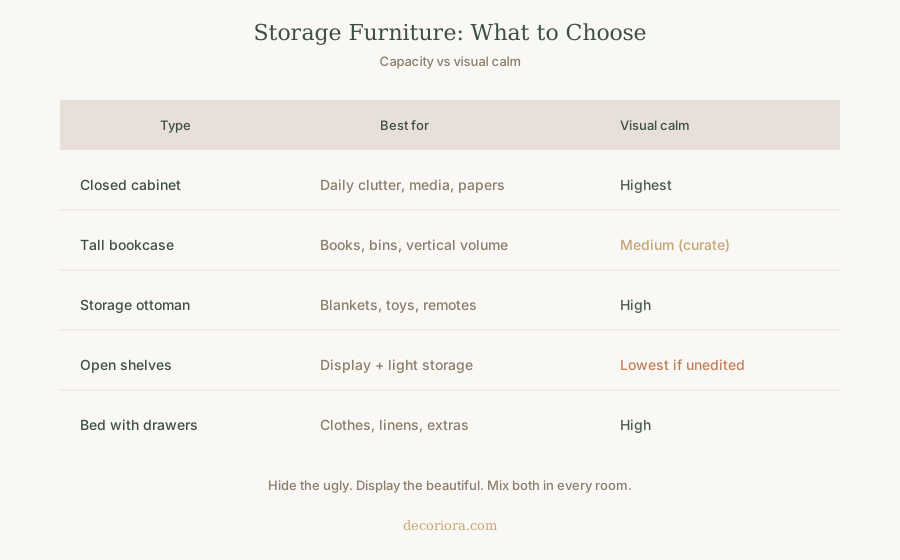
- Closed media cabinets
- Storage ottoman for throws and games
- Basket for current books or toys
- Cable management behind furniture
Open shelves can work if curated. For layout that protects walkways while you add storage, see how to arrange living room furniture and small apartment decorating ideas.
Solution 12. Bedroom storage beyond the dresser
Why it works: Clothes expand to fill every surface.
Stack solutions:
- Under-bed bins
- Vertical closet work
- Nightstand drawers for true night needs only
- One chair is not a laundry pile (add a hamper instead)
A calm bedroom needs closed storage for the ugly and empty surfaces for rest.
Solution 13. Floating shelves used with restraint
Why it works: Shelves add capacity without floor bulk, but packed shelves look chaotic.
Rules:
- Leave breathing room on each shelf
- Use bins for small categories
- Repeat basket styles for calm
- Keep heavy items lower for safety
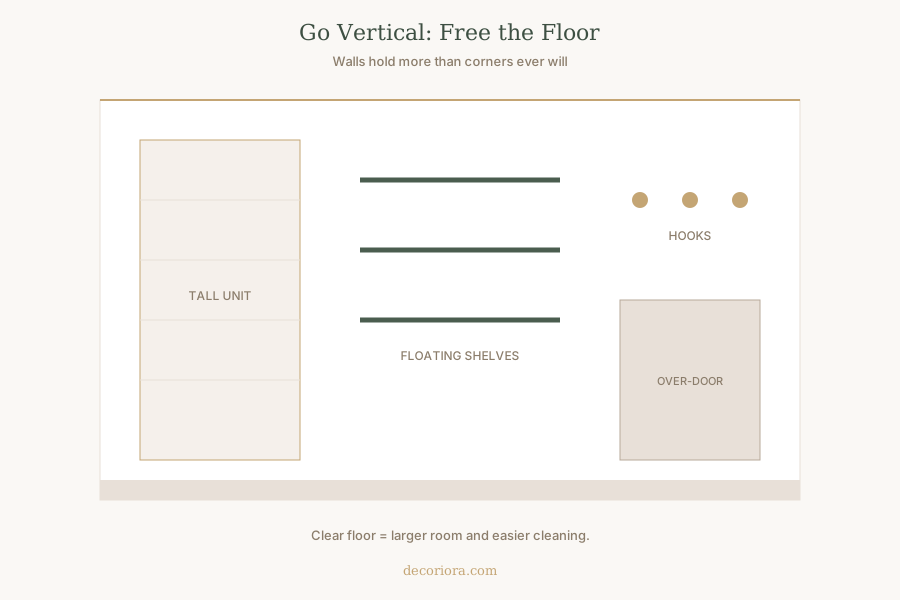
Solution 14. Vertical storage everywhere it is safe
Why it works: Floor area is limited. Wall height often is not.
Use tall bookcases, wall rails, over-door organizers where allowed, and high shelves for rare items. Clear floors make apartments feel larger and easier to clean. This pairs with the visual height ideas in small apartment decorating ideas.
Solution 15. Hidden storage furniture
Why it works: Furniture that works twice earns its footprint.
High-value pieces:
- Storage ottoman or bench
- Coffee table with drawers or lift top
- Bed with drawers
- Bench with shoe cubbies at the entry
- Sofa with under-seat storage only if quality is solid
Solution 16. Multifunctional furniture over single-use pieces
Why it works: Every square foot should multitask in a compact home.
Examples: desk that becomes a console, nesting tables, foldable dining, daybed in studios. Choose pieces that fit measured walkways, not showroom dreams.
Solution 17. Baskets as visual unifiers
Why it works: Matching or related baskets turn "stuff" into intentional storage.
Tips:
- Pick one material family per room (for example, woven natural or fabric soft-sided)
- Size baskets to the shelf, not the other way around
- Do not mix ten unrelated bin styles in one sightline
Solution 18. Labels and containers that match the system
Why it works: Labels reduce decision fatigue for you and anyone you live with.
Keep labels simple: category words only. Measure shelves and bins before ordering sets. Clear containers help for pantry items you need to see; opaque containers calm visual noise for bathroom and closet backups.
Solution 19. Small apartment hacks that are actually useful
High-signal hacks:
- Tension rods under sinks for spray bottles
- File-sort pans and lids vertically
- Magazine files for cutting boards and trays
- Rolling cart as a mobile pantry or cleaning station
- Door-back organizers for spices or toiletries when lease-safe
- Vacuum bags for bulky off-season textiles (store in a bin, not as a permanent mess)
Skip hacks that create more steps than they save.
Solution 20. Studio apartment storage: one home per category
Why it works: Studios collapse when categories scatter across the room.
Studio rules:
- One clothes zone
- One kitchen zone
- One work zone
- One "inbox" for mail and papers
- Closed storage near the sleep zone so rest looks restful
Use furniture backs and open shelves as soft dividers, but keep circulation clear. Decorating and zoning ideas live in small apartment decorating ideas.
Solution 21. Rental-friendly storage (no permanent regret)
Why it works: Many renters need capacity without losing deposits.
Prefer:
- Freestanding units
- Under-bed and over-door solutions when allowed
- Removable hooks
- Furniture that moves with you
Avoid irreversible built-ins unless approved in writing. For broader damage-free decorating context, see the Renter-Friendly Home Decor Guide.
Solution 22. Seasonal storage rotation
Why it works: Off-season bulk steals daily space.
Rotate twice a year:
- Edit what you did not wear or use
- Clean and store off-season items high or under bed
- Bring current season to easy reach
- Relabel bins if contents change
Keep a short inventory note inside each seasonal bin.
Solution 23. Avoid the organization mistakes that create clutter again
| Mistake | Why it fails | Better solution |
|---|---|---|
| Buying bins first | Stores junk | Declutter, then measure |
| Too many open shelves | Visual noise | Closed storage for ugly items |
| No empty space | System overflows | Leave 10-20% capacity |
| Homes too far from use | Items never return | Store at point of use |
| Unlabeled shared spaces | Household confusion | Simple labels |
| Organizing instead of exiting | Volume stays high | Reduce, then contain |
Cluttered storage also makes rooms look cheaper and smaller. That is why organization pairs with home decorating mistakes that make a home look cheap and how to make your home look expensive on a budget: calm surfaces and correct scale still matter.
Room-by-room quick map
| Room | Priority storage moves |
|---|---|
| Entry | Hooks, tray, shoe limit, hidden bin |
| Living | Closed media, ottoman, cable control |
| Kitchen | Zones, clear counters, vertical pans |
| Bedroom | Under-bed, hamper, nightstand edit |
| Closet | Hang/fold/bin zones, seasonal top shelf |
| Bath | Under-sink bins, hooks, daily tray |
| Laundry | Sorter, supply caddy, fold landing |
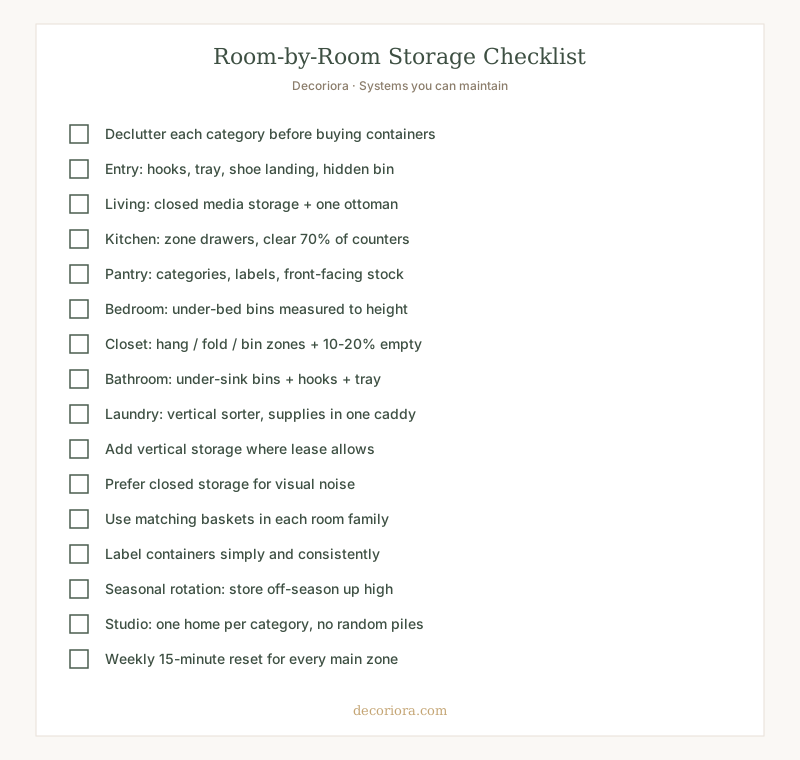
Printable room-by-room storage checklist
Save or print this checklist and complete one room at a time.
Putting it all together
Small apartment storage that actually works follows one pattern:
- Reduce volume
- Sort categories
- Assign homes by zone and frequency
- Measure
- Contain and label
- Maintain weekly in short resets
You do not need a larger apartment to feel in control. You need fewer decisions every day, which is what good systems provide.
When you want a complete compact-home organization plan with room systems, challenges, and printables, explore the Small Apartment Organization Bible. For a fast edit before you set up storage, start with The Weekend Declutter Blueprint. For renter-safe styling around those systems, see the Renter-Friendly Home Decor Guide.
From Our Collection
Small Apartment Organization Bible
Room-by-room storage systems, declutter frameworks, and practical tools designed for compact homes that need to stay calm after the first reset.
Your apartment will not stay organized because you bought more containers. It will stay organized because every item has a home you can maintain without thinking hard.
Frequently asked questions
How do I create more storage in a small apartment?
Declutter first, then use vertical space, under-bed bins, closet zoning, closed cabinets for visual noise, and multifunctional furniture. Assign every category a home near where you use it, measure before buying containers, and leave some empty capacity so the system can absorb laundry day and deliveries.
Where can I store things without making my apartment look cluttered?
Hide daily clutter in closed storage such as cabinets, ottomans, lidded bins, and under-bed drawers. Keep open shelves curated, clear counters, and use matching baskets so remaining storage looks intentional. Display only what you love; store the rest out of sight.
What are the best storage ideas for tiny homes and studios?
Prioritize multifunctional furniture, vertical shelves, under-bed storage, over-door organizers where allowed, one home per category, and soft zones with closed storage for sleep and living. Avoid filling every surface. Clear floor and continuous walkways matter as much as bins.
How do professional organizers maximize small spaces?
Professionals edit volume first, sort by category, assign zones, measure the space, choose containers that fit, label simply, and build a short weekly reset. They store by frequency of use, hide visual noise, and refuse to buy storage for items that should leave the home.
What storage is rental-friendly?
Freestanding shelves, under-bed bins, tension or over-door solutions when allowed, removable hooks, rolling carts, fabric bins, and furniture that moves with you. Avoid permanent built-ins unless your lease permits them. Always check your agreement before drilling.