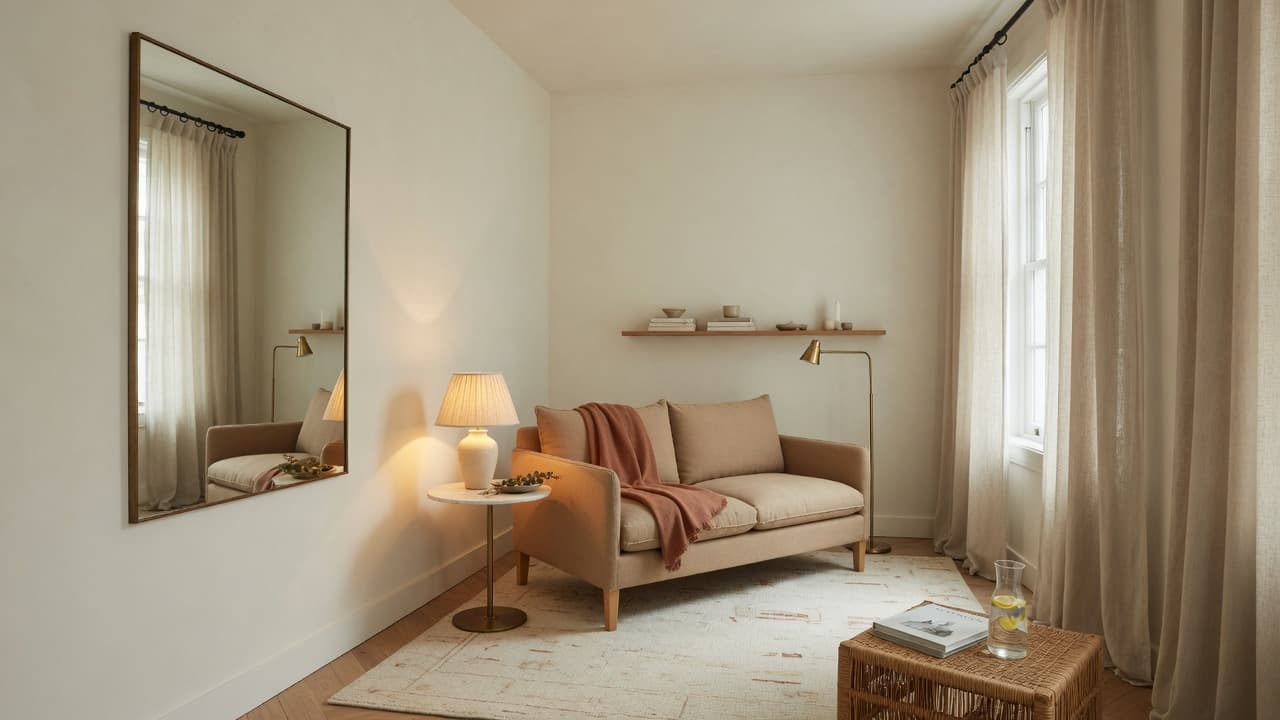
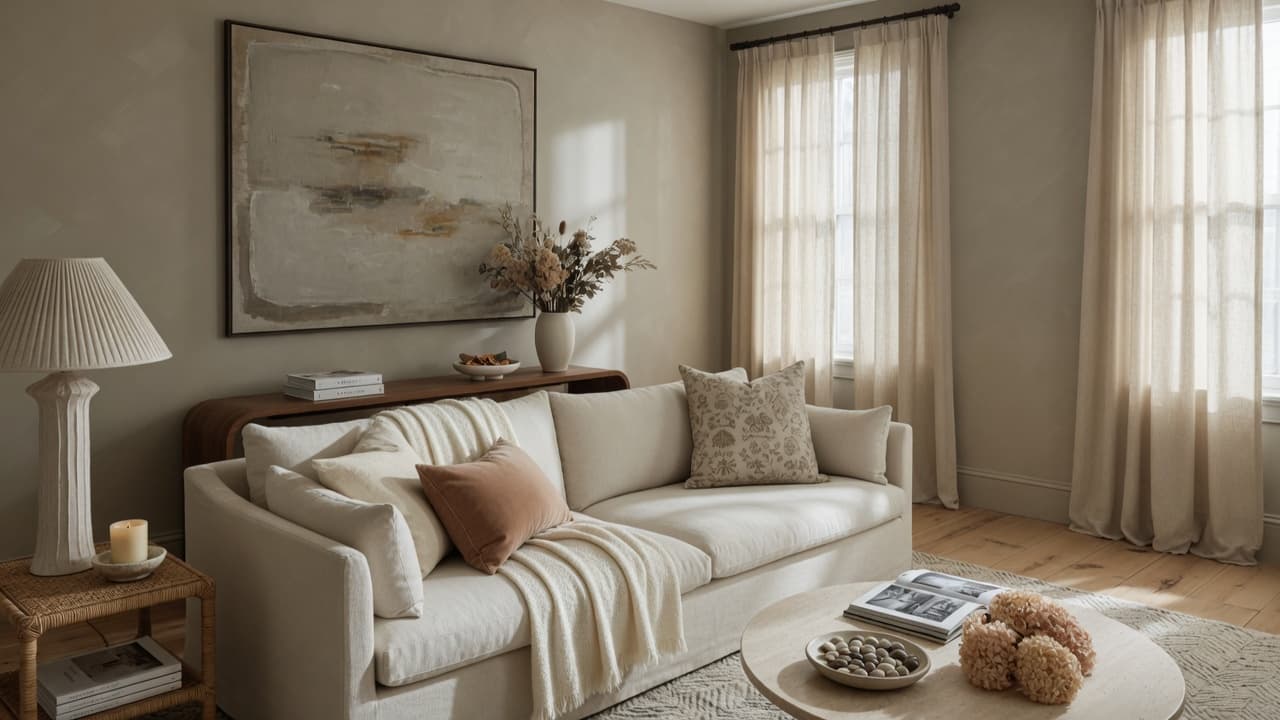
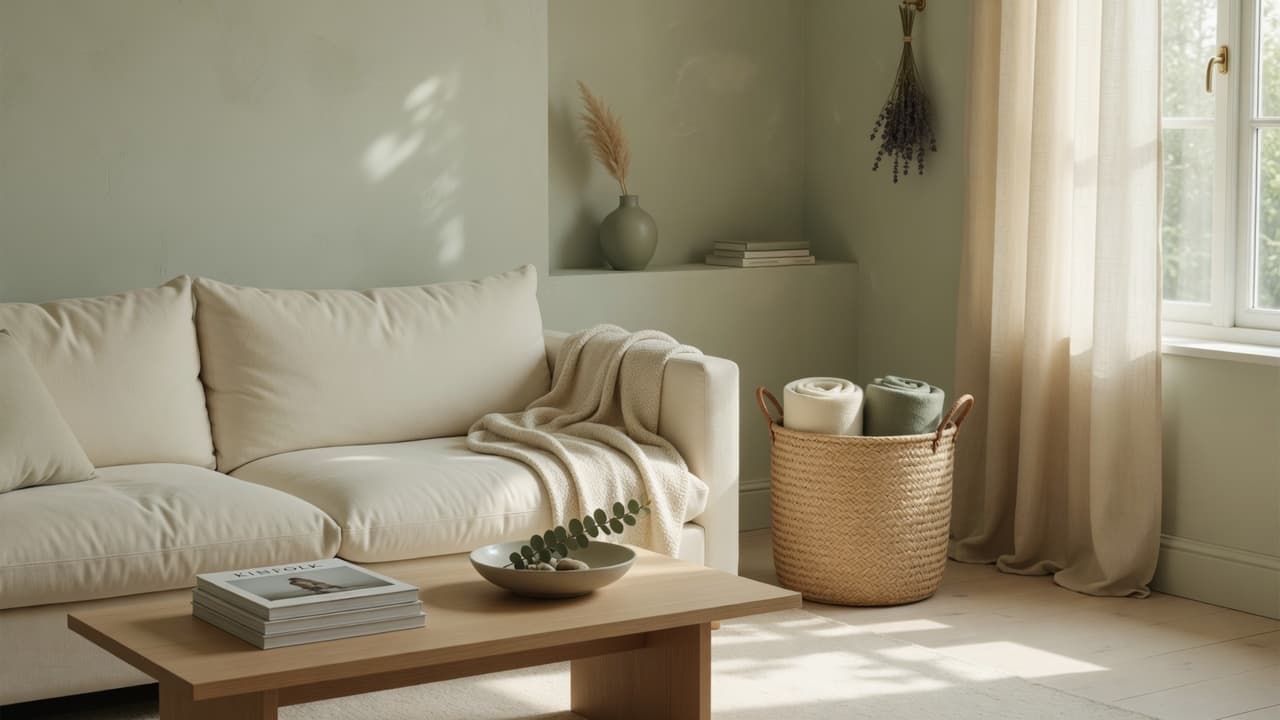
Renter-Friendly Wall Decor: 25 No-Drill Ideas for Apartment Walls
Decorate rental walls without major permanent changes. Explore 25 renter-friendly wall decor ideas, no-drill display methods, gallery wall tips, and practical wall-surface considerations.
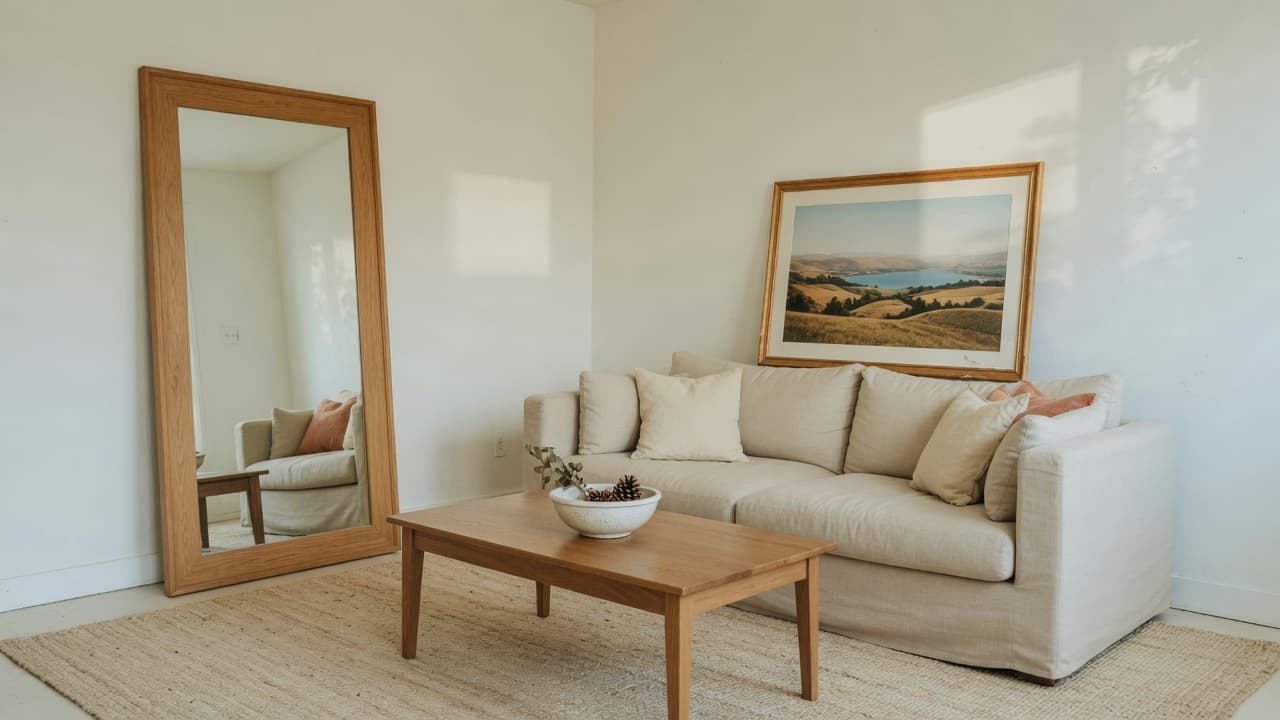
Blank rental walls are a design problem and a lease problem at the same time. The room looks unfinished. Nails feel risky. Many “damage-free” products still depend on paint quality, wall texture, humidity, and how carefully you remove them.
This guide is a decision system first and a list second. You will choose wall decor based on the surface, the weight of the object, the visual job it needs to do, and the exit plan at move-out. Renter-friendly does not mean universally damage-proof. It means lower-commitment, no-drill where possible, and reversible in many situations when you follow the product and the lease.
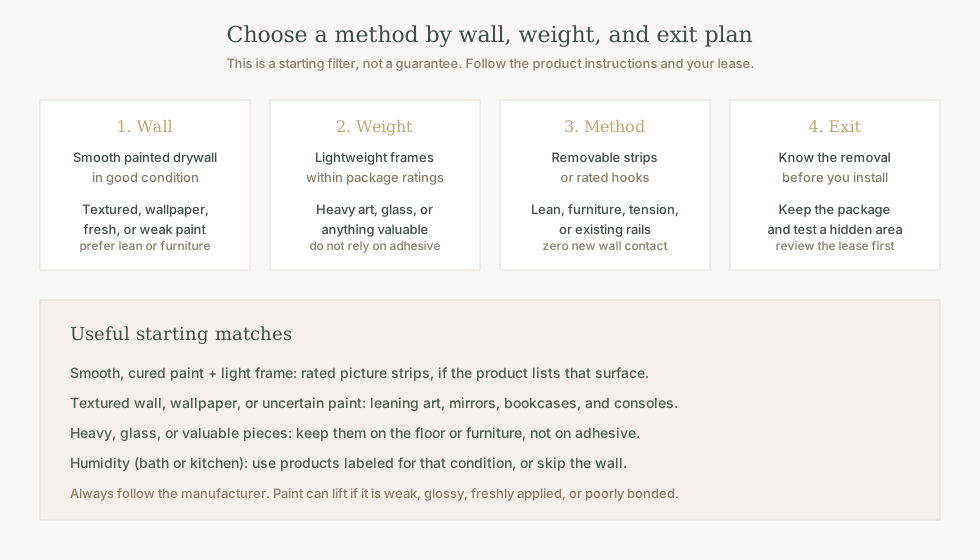
Before you decorate: check these 5 things
Do this before you buy a single frame.
1. Lease rules. Look for language about holes, adhesives, wallpaper, and “alterations.” Some leases allow small nails and forbid peel-and-stick. Others reverse that. If it is unclear, ask in writing. This is not legal advice, and a landlord does not have to approve every request.
2. Wall material. Smooth painted drywall is the usual candidate for rated strips and hooks. Textured paint, plaster, brick, tile, glass, and wallpaper each need a different method. Brick clips, for example, only belong on brick with a usable lip.
3. Paint condition and cure. 3M’s Command FAQs say products work on painted walls when the paint is fully cured for at least 7 days, clean, smooth, and in good condition. Fresh paint, chalky paint, or poorly bonded paint can lift on removal. If the unit was recently painted, wait. If the paint already chips when you press a fingernail in a closet, do not trust adhesive there.
4. Decor weight and value. Weigh the piece, or err high. Use only the rating printed on the package you actually bought. Do not stack “internet weight limits” from mixed product sizes. Heavy glass, large mirrors, and anything you cannot replace should stay on the floor or on furniture.
5. Removal method. If you cannot picture the removal, do not install it. Command’s guidance is to pull the tab slowly straight down along the wall, not out toward you. Other products peel at a specified angle. Keep the box.
If you are planning the whole apartment, not only one wall, the Renter-Friendly Home Decor Guide covers lease review, room planning, lighting, layout, and move-out restoration in one 42-page system.
The renter-friendly wall decor decision guide
Use this table as a filter. “Works without drilling” means no new holes. It does not mean zero risk to paint.
| Method | Best for | No drill? | Visual effect | Wall notes | Removal notes |
|---|---|---|---|---|---|
| Removable picture strips | Lightweight, flat-backed frames | Yes | Looks mounted | Smooth, cured, sound paint | Stretch tab slowly down the wall |
| Removable hooks | Light objects, small wreaths, textiles | Yes | Small hardware visible | Same as strips; humidity-rated versions exist | Follow the hook’s tab instructions |
| Leaning art | Large prints, canvases | Yes | Casual, designed | Any wall; needs floor clearance | None on the wall |
| Floor mirror | Light, height, dressing | Yes | Strong vertical line | Any wall; keep it stable | None on the wall |
| Console or bookcase styling | Blank walls you cannot touch | Yes | Furniture does the architecture | Any | Packs up with you |
| Tension rod | Textiles in a recess or between walls | Yes | Soft, layered | Needs two parallel surfaces | Release tension slowly |
| Existing rail or molding | Homes that already have picture rail | Yes, if already there | Traditional, flexible | Do not add a rail without permission | Hooks come off the rail |
| Peel-and-stick wallpaper | One accent wall | Yes | High impact | Smooth, sound paint; many leases restrict it | Peel slowly per manufacturer |
| Removable decals | Small graphic moments | Yes | Can look temporary if overused | Smooth paint; avoid texture | Peel slowly |
| Freestanding ledge | Rotate prints without hanging | Often | Collected, changeable | Buy a furniture ledge, not an adhesive shelf, for weight | Moves with you |
Design principles that make no-drill decor look intentional
The difference between “dorm workaround” and “finished rental” is rarely the product. It is scale, empty space, and how the object relates to furniture.
Scale. One larger piece usually beats five tiny ones. Aim for art about two-thirds to three-quarters the width of the sofa or console below it. Full hanging measurements live in how high you should hang wall art. For leaning pieces, the same width rule still applies. The bottom edge can sit on the floor or on a console, so the center will sit lower than a hung piece, which is fine if the object is large enough.
Negative space. Leave wall around the composition. A blank margin is what makes a leaning canvas look considered.
Visual weight. Dark frames, glass, and large dark prints read heavier. On a small wall, one medium print with a light mat often feels calmer than a dark gallery.
Frame consistency. Mix sizes. Repeat one wood tone or one black profile. Mixed metals plus mixed mats plus mixed subjects is how a no-drill wall starts to look temporary.
Furniture relationship. Art should feel attached to the sofa, bed, or console, not floating in the middle of leftover wall. Keep about 6 to 10 inches between furniture and the lowest frame when you do hang a cluster.
These are the same cues that make rooms look more expensive without renovation. For the broader system of scale, light, and editing, see how to make a home look expensive on a budget.
25 renter-friendly wall decor ideas
Not every idea belongs on every wall. Read the caution line. Skip anything that fights your lease or your paint.
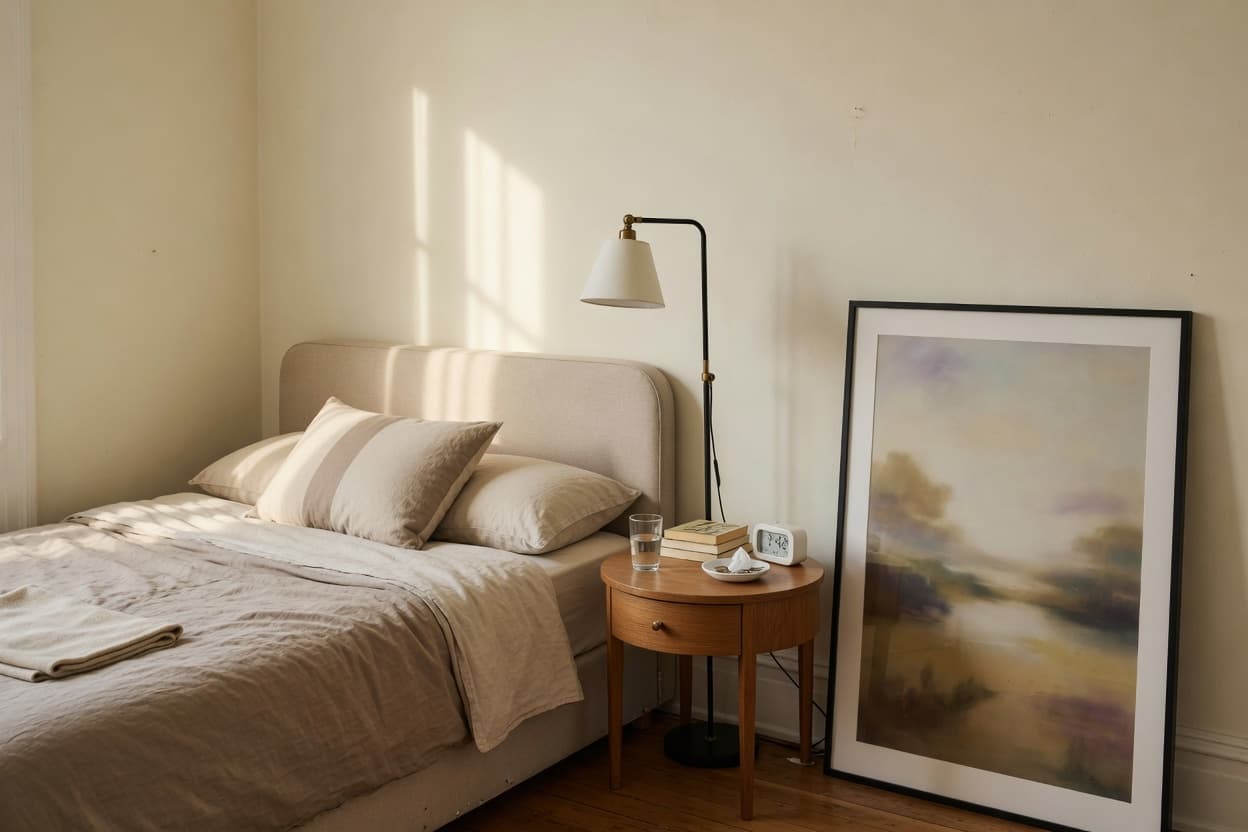
1. Oversized leaning artwork
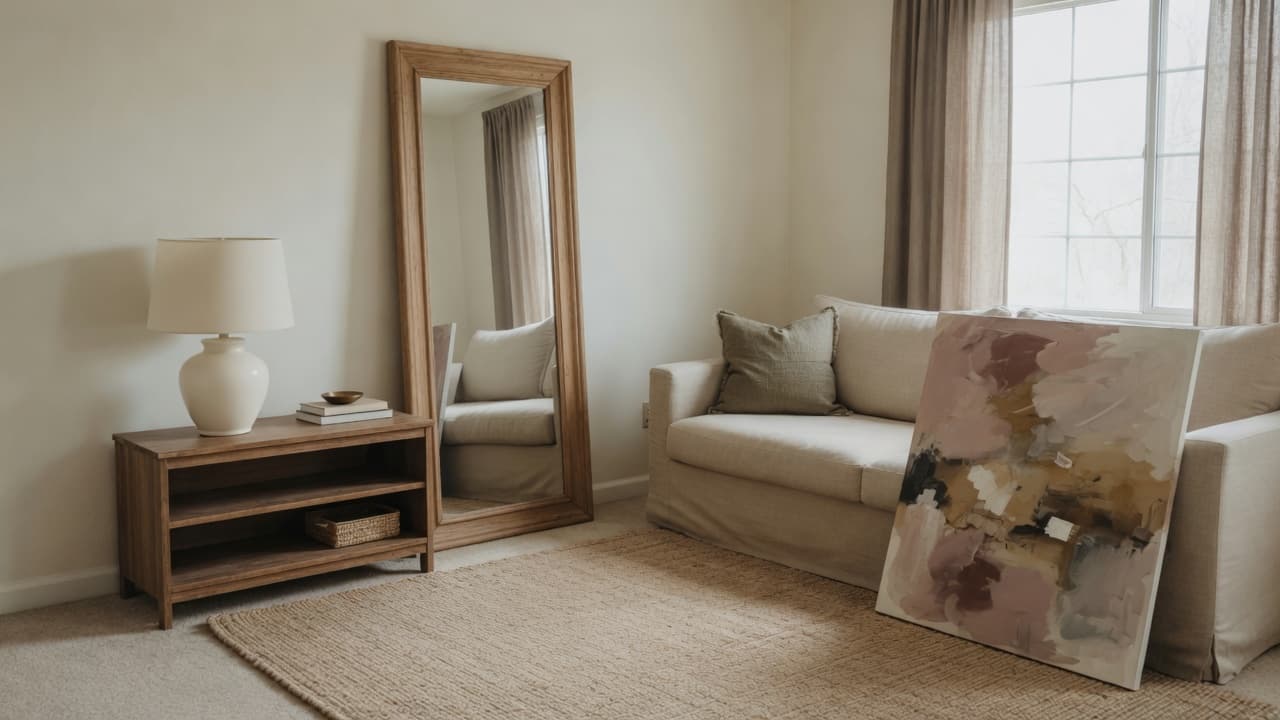
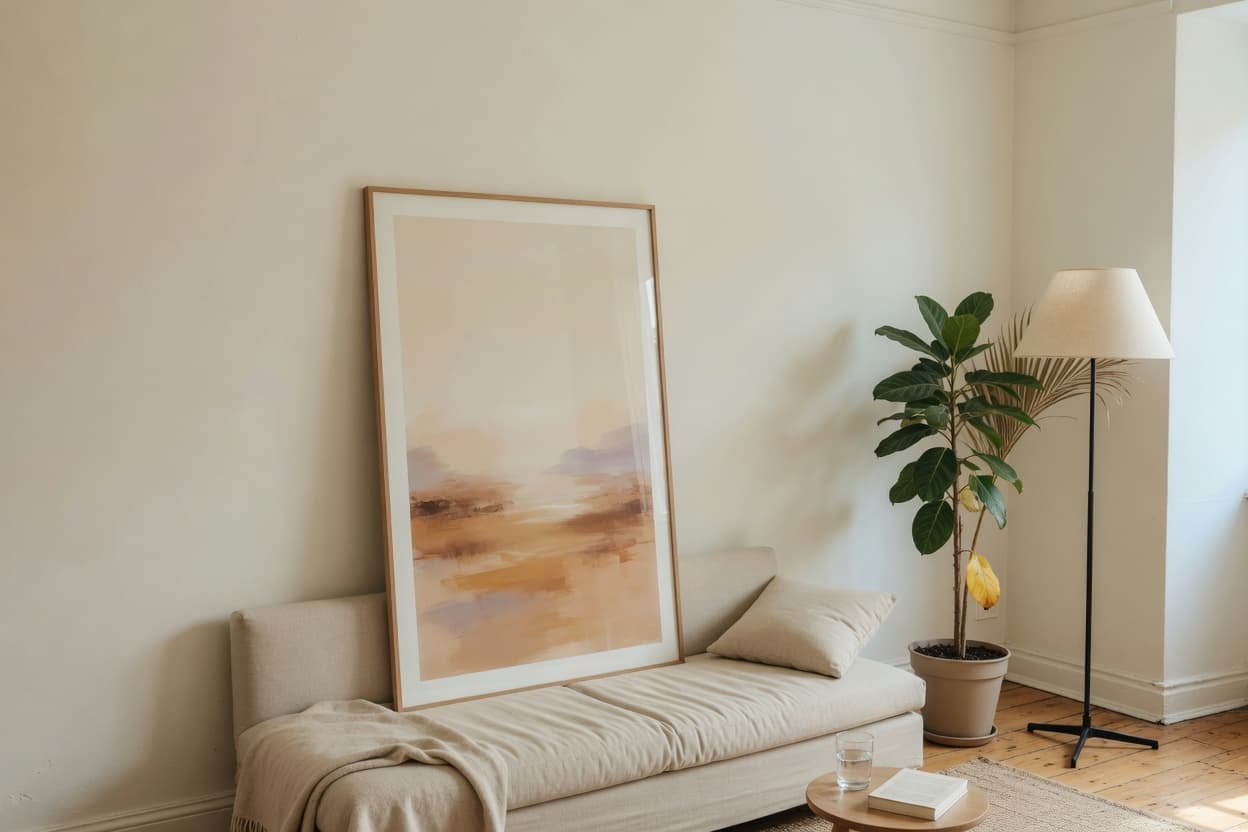
A large framed print or canvas that sits on the floor and rests on the wall is the highest-impact no-drill move in most rentals. It supplies scale immediately. Best in living rooms and bedrooms with a clear stretch of floor. Keep walkways open, and do not lean glass-heavy pieces in a high-traffic path. If you have pets or small children, set the bottom edge on a low console so it is harder to knock.
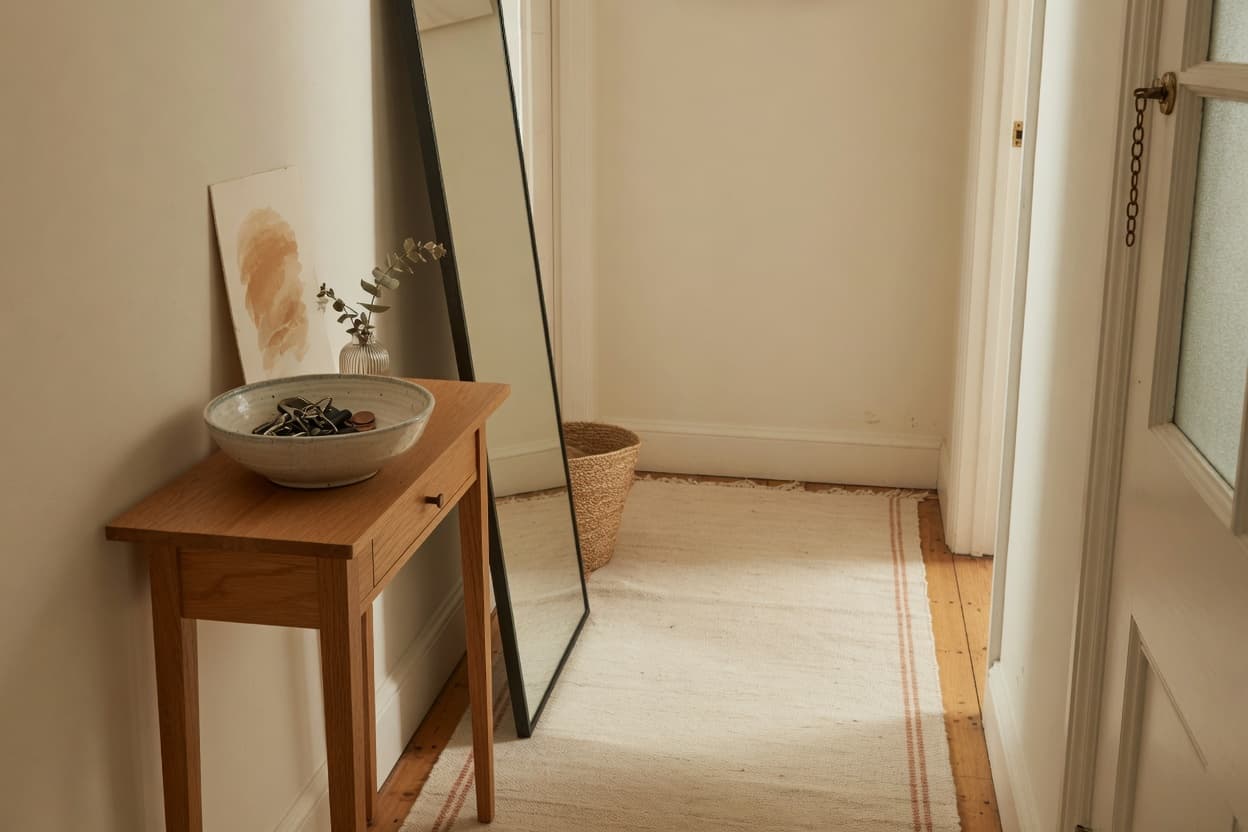
2. Full-length floor mirror
A tall mirror bounces daylight, adds a vertical line, and gives you a dressing function. Lean it where it cannot be bumped out of its plane. Best in bedrooms, entries, and the dark end of a living room. Choose a stable stand or a frame with a wide enough foot. This is not the place for adhesive.
3. Leaning gallery on the floor
Stack two or three frames of related color, largest at the back, smallest in front, slightly offset. The overlap is the styling. Works against a sofa wall or beside a dresser. Use lightweight frames so the stack is stable.
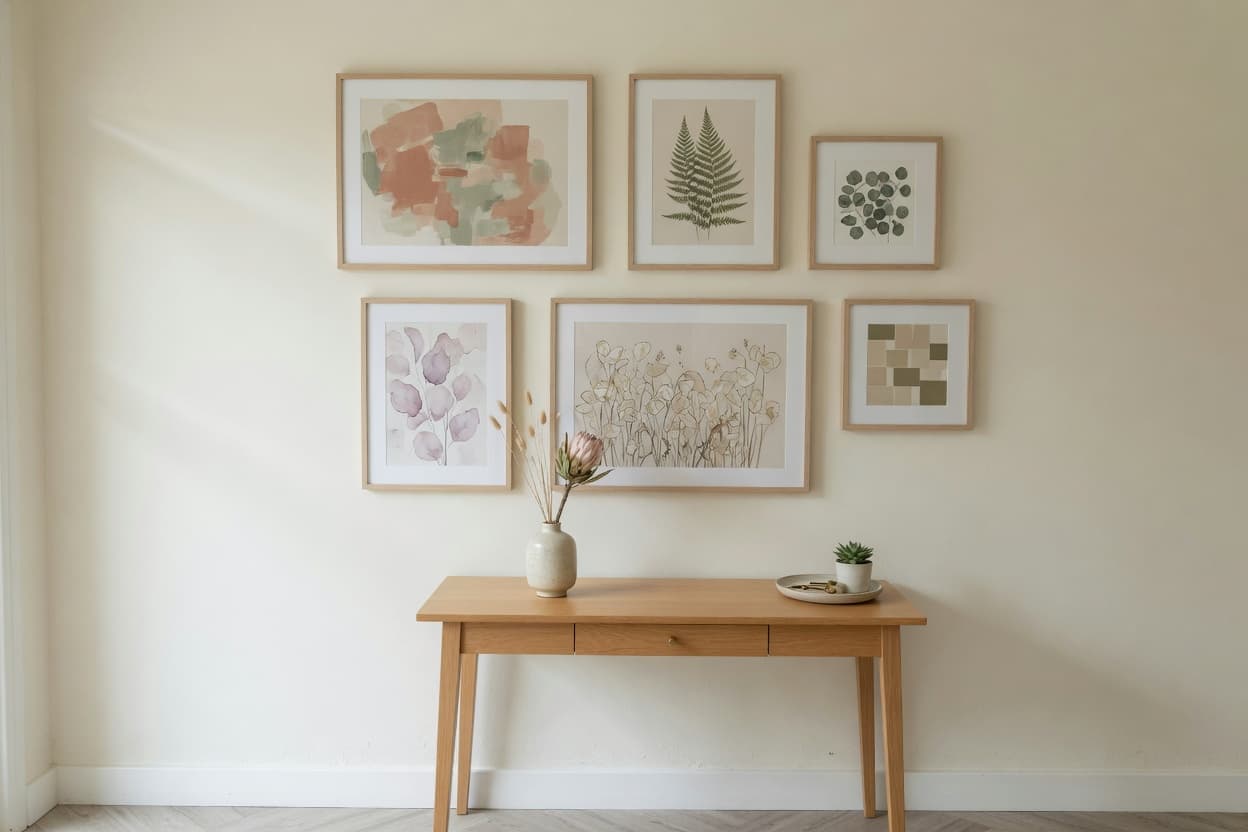
4. Lightweight gallery wall with rated picture strips
This is the version people search for. It can look as finished as a nailed gallery on smooth, fully cured painted walls when the frames are light and you follow the package. Clean the wall with isopropyl rubbing alcohol, press as directed, and wait the stated time (often one hour) before hanging. 3M notes that paint can peel if it is weak, old, uncured, or if the strip is pulled outward. If any of those conditions apply, use idea 3 instead.
5. Removable hooks for suitable lightweight decor
Use hooks for wreaths, small baskets, calendars, and textiles, not for heavy mirrors. Buy the size printed for your object’s weight, and use bathroom-rated products in humidity. A hook that fails is a scuff plus a broken object.
6. Console styling against a blank wall
Let furniture do the architecture. A slim console, a lamp, a bowl, and one leaning print can finish a wall that you should not touch. Best in entries and behind sofas that cannot float. This is the default when paint is questionable.
7. Bookcase as a decorative wall layer
An open bookcase placed a few inches off the wall creates vertical display without hanging. Style the back of the case with a consistent paper color or a few large books laid horizontally. In studios, it can also divide sleep and living. For more compact-layout thinking, see small apartment decorating ideas.
8. Decorative ladder display
A leaning ladder holds throws, magazines, or a single framed print from a rung. It needs a stable angle and a wall it will not scuff. Add felt pads at contact points. Best in bedrooms and living corners.
9. Tension-rod textile display
A spring rod between two walls, inside a closet niche, or in a window recess can hold a linen panel or lightweight tapestry. Spread the weight. Do not overload a cheap rod. Check that the side walls can take pressure without marking.
10. Use existing picture molding or rail
Some older buildings already have picture rail. If yours does, use rail hooks and cord. Do not install a new rail unless the lease and landlord allow it. Existing hardware is one of the few “hanging” methods with almost no new wall contact.
11. Peel-and-stick wallpaper, used narrowly
One well-chosen wall can change a rental more than a dozen frames. It is also one of the easiest ways to get a deduction if the product, paint, or removal goes wrong. Use it only if the lease allows it, the wall is smooth and sound, and you are willing to remove it slowly per the manufacturer. Skip kitchens with grease and bathrooms with constant steam unless the product is specified for that.
12. Removable decals with restraint
A small botanical or a single arch can soften a child’s room or a blank kitchen nook. A wall of quotes usually looks temporary. Apply to smooth paint, and peel slowly.
From Our Collection
Renter-Friendly Home Decor Guide
Walls are one decision among many. The 42-page guide adds lease review, layout, lighting, kitchen and bath options, a 30-day sequence, and move-out checklists for the rest of the apartment.
13. Framed textile or fabric art
A linen swatch, vintage scarf, or small rug fragment in a simple frame gives texture that prints cannot. Keep the frame light if you plan to use strips. Otherwise lean it.
14. Tapestry or woven hanging
A large textile covers more wall per dollar than framed art. Hang it from a tension rod, from rated hooks, or drape it over a ladder. Avoid heavy weaves on small adhesive hooks. Press and steam wrinkles before you hang so it does not look like a bedspread.
15. Freestanding picture ledge
Buy a furniture-style ledge or a low bookcase used as a ledge. Adhesive “floating shelves” are a common failure point because people put too much weight on them. A real ledge lets you rotate postcards, small frames, and objects without touching the wall.
16. Oversized unframed canvas
A gallery-wrapped canvas leans cleanly and weighs less than glass. Best when the painting is large enough to read from across the room. Protect the bottom corners with felt if it sits on a hard floor.
17. Postcard or print grid
A tight grid of 4, 6, or 9 similar prints looks graphic rather than cluttered. Use matching frames or the same paper size. Strips are reasonable here because each piece is light. On risky walls, clip them to a freestanding wire grid that stands on a console.
18. Lightweight pinboard or memo display
A fabric pinboard can hold invitations and small art. Use a product with a clear weight rating, or lean a framed cork panel. This belongs in an entry or kitchen, not as the living room focal point.
19. Plant-based vertical composition
A tall plant, a leaning frame, and a floor lamp can fill a corner the way a gallery would, without a single adhesive. Best in empty corners and studio sleep zones. Choose a plant that matches the light you actually have.
20. Mirror plus leaning artwork
Pair a tall mirror with one smaller print in front of it or beside it. The overlap is the styling, and both objects can stay off the wall. This is especially useful in narrow entries.
21. Fabric panel or curtain as a wall
A floor-length linen panel on a tension rod can soften a blank studio wall or hide a work zone. Hang it high, as you would a curtain. Full rod-height rules are in the curtain height guide. Confirm the rod will not mar the side walls.
22. Plug-in picture light or adhesive sconce, only if rated
A small picture light above a leaning canvas, or a plug-in sconce beside a bed, can make a no-drill wall look architectural at night. Use only products with a stated adhesive or plug-in method, route the cord neatly along baseboard, and skip anything that needs hidden wiring.
23. Window-adjacent hanging
If the window already has a rod, a lightweight textile can hang from that rod on the wall side of the drapery, or a plant can hang from a tension rod inside the frame. Do not screw into the window casing unless the lease allows it.
24. Existing shelf, mantel, or radiator cover display
Use architecture you already have. A row of frames on a mantel, a plant on a deep windowsill, or a tray of objects on a radiator cover creates a wall moment with zero new attachment. Keep heat sources in mind. Do not block vents.
25. Floor-to-wall vignette
Build one complete scene: rug, furniture, lamp, leaning art, and a plant. The wall looks finished because the whole composition is finished. This is the most reliable method when you cannot hang anything, and it packs up in one afternoon.
How to create a renter-friendly gallery wall without drilling
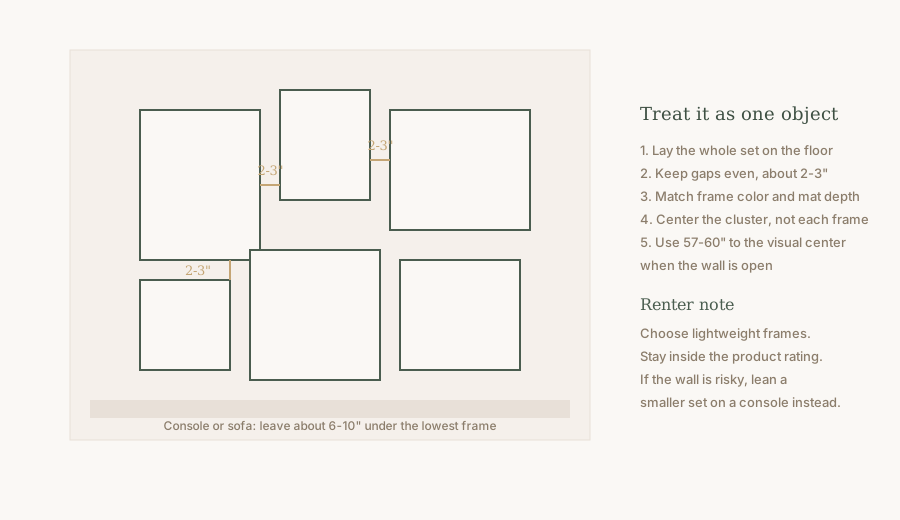
A gallery wall fails in rentals for two reasons: the frames are too heavy, or the layout is restless. Solve both on the floor before anything touches the wall.
- Edit to one story. Botanicals, or family photos, or abstracts. Mixing all three usually looks like a dorm collage.
- Limit the set. Six to nine pieces is plenty for a sofa wall. Four is enough over a console.
- Lay it out on the floor. Keep gaps even, usually 2 to 3 inches. Treat the whole group as one rectangle.
- Measure the furniture relationship. If it sits above a sofa or console, the bottom row should land about 6 to 10 inches above the furniture. On an open wall, center the whole cluster so the visual midpoint is about 57 to 60 inches from the floor. Details are in the wall art placement guide.
- Weigh the heaviest frame. If it exceeds the strip rating, that piece leans or sits on a ledge. Do not “just add more strips” beyond the instructions.
- Prep the wall. Smooth, clean, dry, fully cured paint. Wipe with isopropyl rubbing alcohol. Do not use household cleaners that leave residue.
- Install one piece at a time. Press for the full time on the package. Wait before hanging.
- Plan removal now. You will pull tabs slowly down the wall, not out. If a tab is missing later, follow the manufacturer’s backup method. Do not pry.
Wall decor for small apartments
Small walls punish clutter faster than large ones. The goal is a vertical emphasis and one clear focal point.
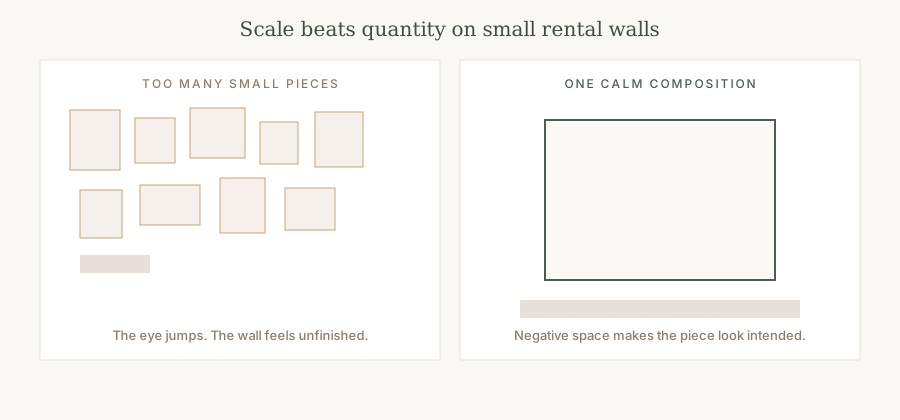
- Prefer one larger object over a constellation of minis.
- Use a mirror to borrow light, not a second gallery.
- Keep color continuous: same wood, same paper tone, same metal.
- Leave a margin of empty wall. That margin is what makes a studio feel designed rather than stacked.
- In a studio, let the sofa wall or the bed wall be the only “art wall.” The rest can stay quiet.
Room-by-room mini guides
Living room. One large lean or a tight cluster above the sofa, plus a lamp so the wall works after dark. Do not hang a TV-sized gallery on a tiny sofa wall.
Bedroom. A leaning print beside the bed is often safer than hanging over the headboard, especially with glass. If you do hang, stay inside the product rating and keep the center line related to the headboard, not the ceiling.
Studio. Pick one wall that faces you when you enter. Finish that wall. Use a bookcase or curtain panel if you need a sleep-zone cue. Avoid decorating every remaining surface.
Entryway. A mirror, a console, and one small leaning work. You need a place for keys more than you need a gallery. Keep the composition narrow so the door can open.
Kitchen or dining. Use existing shelves, a freestanding ledge, or a single small frame on a rated strip away from the stove. Grease and steam weaken adhesives. Skip peel-and-stick near cooking surfaces.
A simple budget framework
These are priority bands, not live retail quotes. Shop secondhand and printables first.
Under $25. Printable art in a frame you already own. A postcard grid. A small leaning canvas. Washi used only as a temporary edge on a pinboard, not as fake millwork.
Around $50. One larger framed print. A modest floor mirror. A pair of matching frames for a console lean.
Around $100 and up. An oversized framed piece or a quality full-length mirror. That single object will outperform a cart of small decor. Spend leftover budget on a lamp so the wall is lit.
Renter wall decor mistakes that can cost you later
- Using permanent mounting tape or construction adhesive
- Installing adhesive on damaged, glossy, or uncured paint
- Ignoring the package, including wait time and weight
- Overloading hooks or strips “just this once”
- Hanging heavy glass or a large mirror on adhesive
- Pulling a Command tab out from the wall instead of down along it
- Assuming peel-and-stick wallpaper is allowed and painless
- Installing without reading the lease
- Buying a dozen tiny frames before measuring the wall
- Covering every wall because the first one still felt empty
Before move-out: remove temporary wall decor carefully
Start early. Do not improvise.
Follow the manufacturer. For Command-style tabs, stretch slowly straight down. For wallpaper and decals, peel slowly at the angle they specify. Heat is not a universal trick. Use it only if the brand says to.
Photograph the wall after removal. If paint lifts, document it and contact the landlord rather than guessing at a full-wall touch-up that may not match.
Keep leftover product and instructions until you are fully out. Restoration is part of renter decorating, not an afterthought. The Renter-Friendly Home Decor Guide includes move-out documentation and restoration planning with the rest of the apartment system.
From Our Collection
Renter-Friendly Home Decor Guide
Get the complete renter decorating system: lease-aware planning, walls, layout, lighting, kitchen and bath options, and move-out checklists in one 42-page PDF.
Putting it together
You do not need holes to make a rental wall look finished. You need a method that matches the wall, a piece large enough to matter, and enough empty space around it.
Start with the lowest-risk option that still solves the visual problem. For many apartments, that is a leaning print, a mirror, and a lamp. Add adhesive only when the surface, the weight, and the lease support it.
Frequently asked questions
How can I decorate rental walls without nails?
Start with leaning art, mirrors, consoles, and bookcases. Use rated removable strips or hooks only for lightweight pieces on compatible painted walls, following the manufacturer and the lease.
Are adhesive strips safe for rental walls?
They can be lower-commitment on smooth, cured, sound paint when used and removed as directed. They are not safe on every wall. Weak or fresh paint, wallpaper, texture, and outward pulls are common reasons paint lifts.
What wall decor works on textured walls?
Lean large art or a mirror, style furniture, and use freestanding ledges. Most adhesives lose contact on texture.
Can peel-and-stick wallpaper damage rental walls?
Yes, it can. Use it only where the lease allows, on a suitable surface, with a removable product, and with a slow manufacturer-directed removal.
How do I create a gallery wall without drilling?
Edit the set, lay it out on the floor with 2 to 3 inch gaps, and hang lightweight frames with rated strips on a compatible wall. Otherwise lean the set on a console.
How do I decorate a small apartment wall without clutter?
One larger object, even spacing, and empty wall around it. Repeat materials so the composition reads as one.
How can I make blank rental walls look more expensive?
Scale, furniture relationship, warm light, and editing. A correctly sized leaning piece plus a lamp usually beats more small decor.
What should I avoid putting on rental walls?
Heavy glass, oversized mirrors on adhesive, permanent tape, off-label products, and anything on wallpaper, damp walls, or uncured paint. When the lease is unclear, ask in writing.