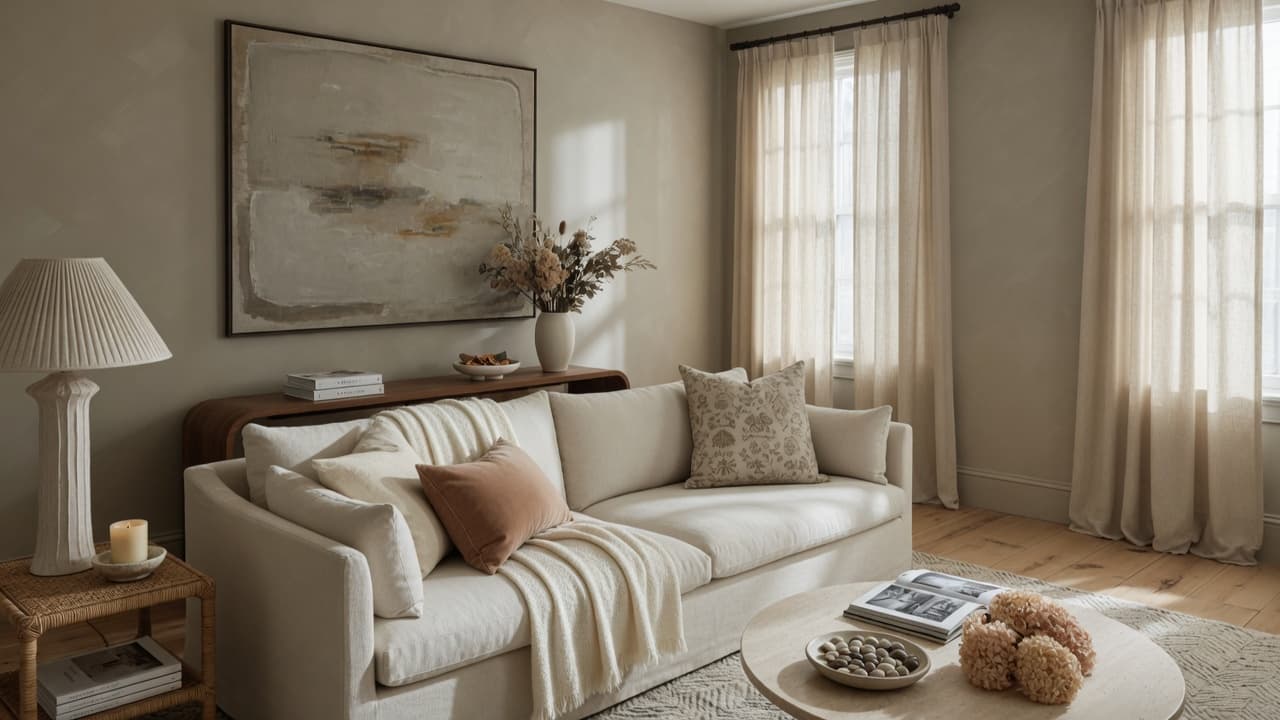
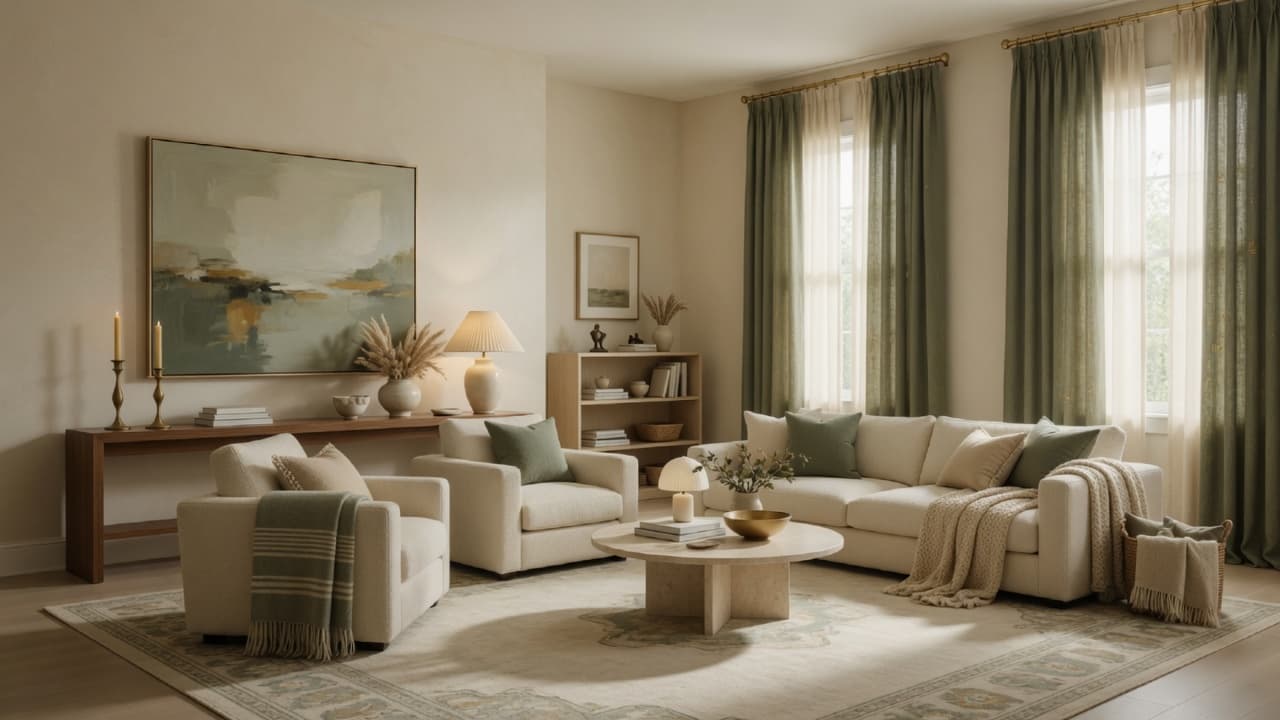
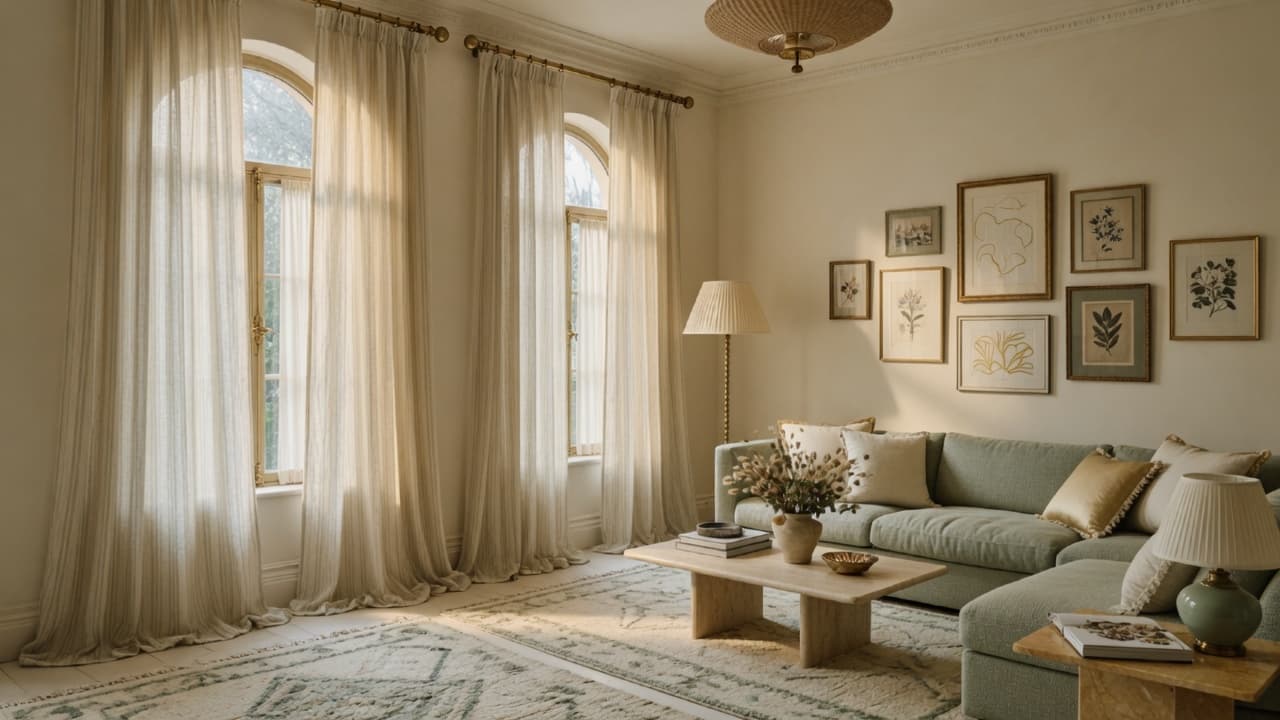
How High Should You Hang Wall Art? The Complete Wall Art Placement Guide
Learn how high to hang pictures, the 57-inch rule, spacing above sofas and beds, gallery wall gaps, and how large art should be over furniture with designer measurements for every room.
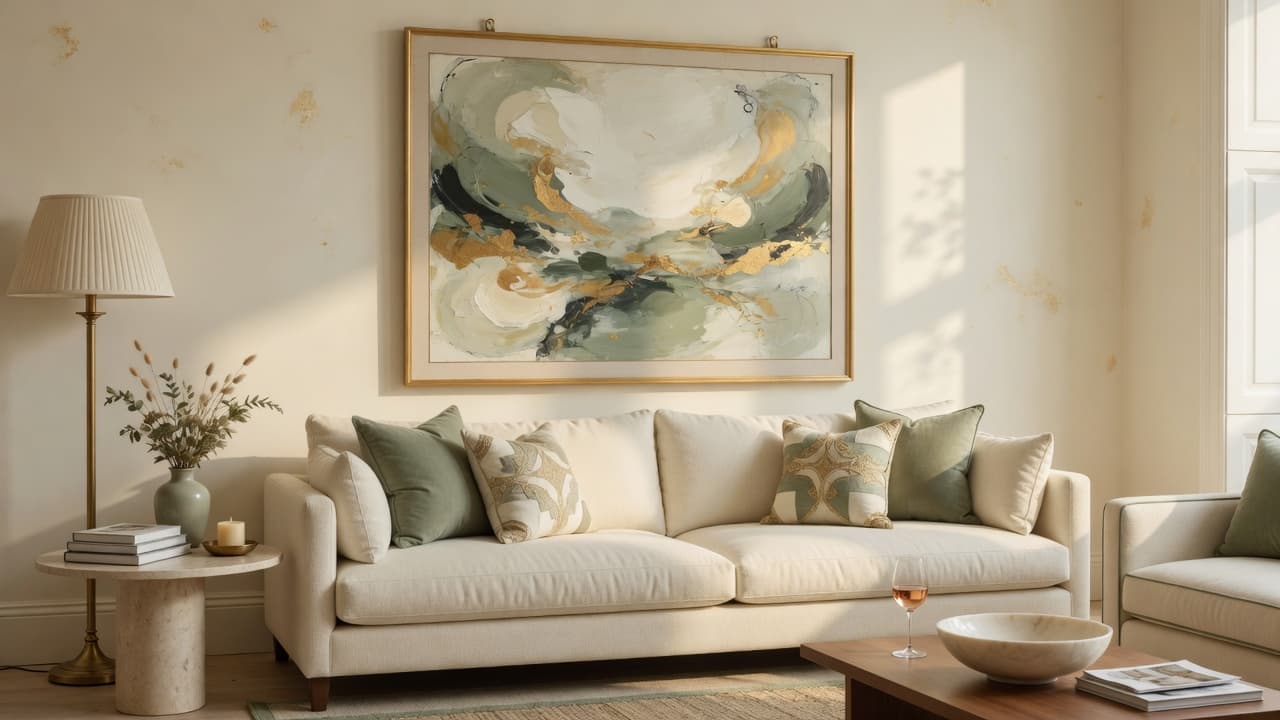
Hang a beautiful print two inches too high and the whole wall can feel off. Hang it at the right height and the room suddenly looks calm, balanced, and professionally designed.
Wall art placement is one of the highest-impact, lowest-cost styling skills you can learn. Furniture can be perfect and the room still look unfinished if pictures float near the ceiling, sit too small above a sofa, or scatter into a nervous gallery with uneven gaps.
This complete guide answers how high should you hang wall art, how the 57-inch rule works, how much space to leave above furniture, how far apart frames should sit, and how large art should be over sofas, beds, fireplaces, and more.
Why artwork placement matters
Art is not only decoration. It is a visual anchor that connects furniture to architecture. Placement affects:
- Whether the wall feels heavy or balanced
- How large furniture appears
- How “expensive” the room reads in person and in photos
- Whether the eye rests or jumps around
Poor placement is one of the classic home decorating mistakes that make a home look cheap. The good news: you often fix it with a tape measure, not a new shopping cart. If you rent and want to avoid new holes, start with renter-friendly wall decor, then use the same height and spacing rules below.
The famous 57-inch gallery rule
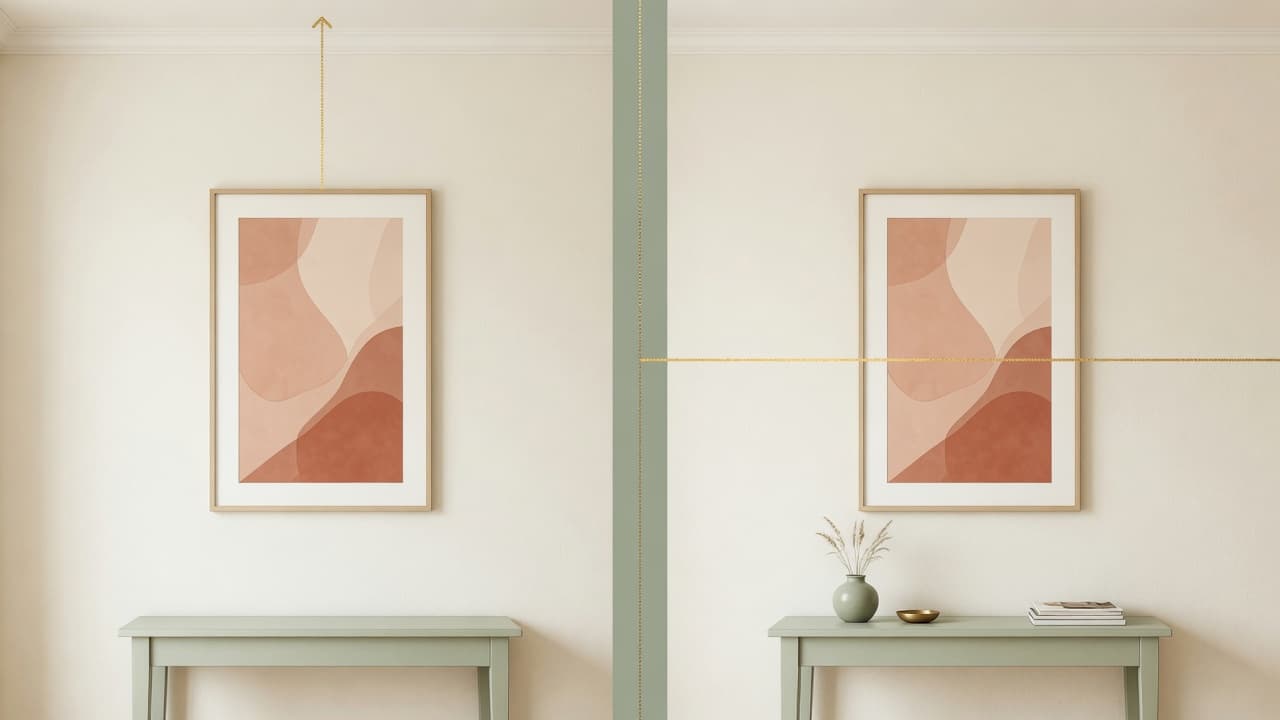
Museums and galleries often hang works so the center of the art sits near 57 inches from the floor, roughly average human eye level. Designers commonly use 57 to 60 inches as a practical home range.
How to apply it:
- Measure up 57–60 inches from the finished floor.
- Mark that height lightly on the wall.
- Align the center of your frame (or the center of a gallery group) with that mark.
- Install hanging hardware so the finished piece lands on that center line.
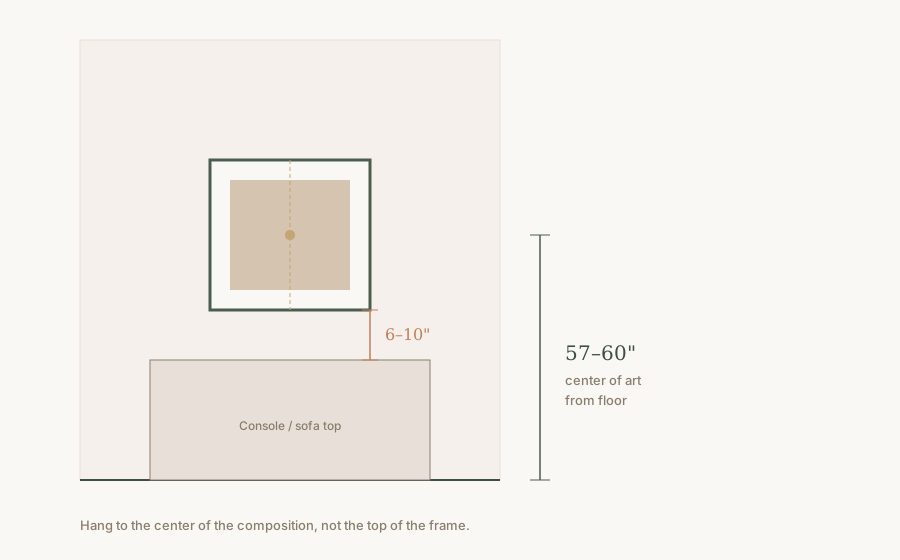
Important: Hang to the center of the composition, not the top of the frame. Tall frames will start higher; short frames will start lower.
How high to hang pictures (step-by-step)
- Choose the wall and the furniture relationship (alone, above sofa, above bed, etc.).
- Measure floor to 57–60 inches for the center target.
- Measure frame height and divide by two to find the center offset.
- Account for wire slack if the piece hangs from a wire (wires shorten the effective drop).
- Use a level. Step back 8–10 feet and check.
- For groups, find the center of the entire cluster, not each frame alone.
Wall art above a sofa
Goals: Related scale, calm gap, conversation with the sofa.
| Guideline | Starting point |
|---|---|
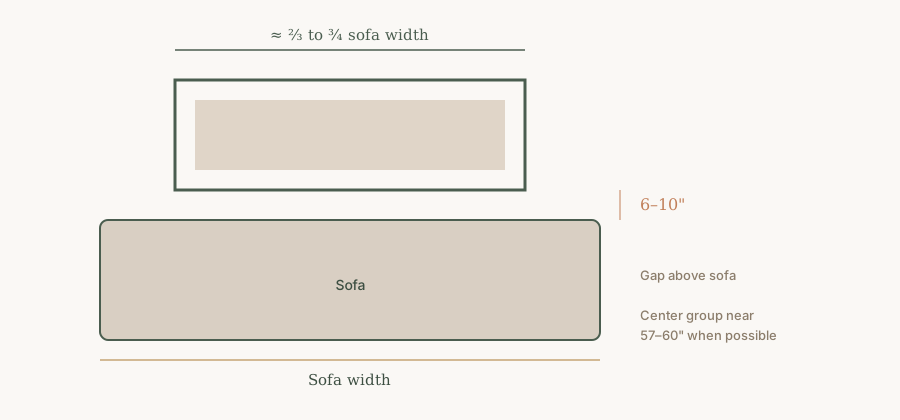
| Vertical gap | 6–10 inches above the sofa back |
| Art width | About ⅔ to ¾ of the sofa width |
| Height rule | Still aim the composition center near 57–60" when the sofa is standard height |
Avoid: A tiny frame lost over a large sofa, or a gallery that starts so high it disconnects from the seating.
Wall art above a bed
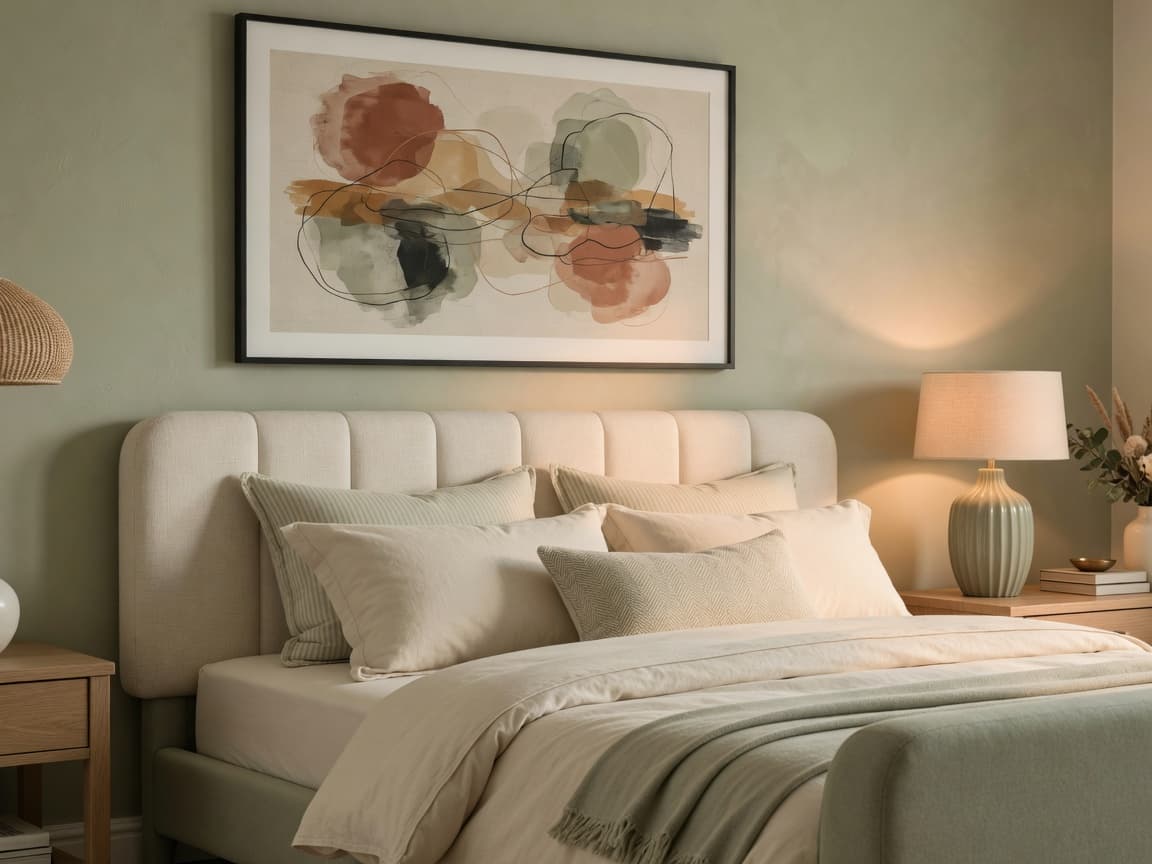
Goals: Soft focal point without crowding pillows or a tall headboard.
| Guideline | Starting point |
|---|---|
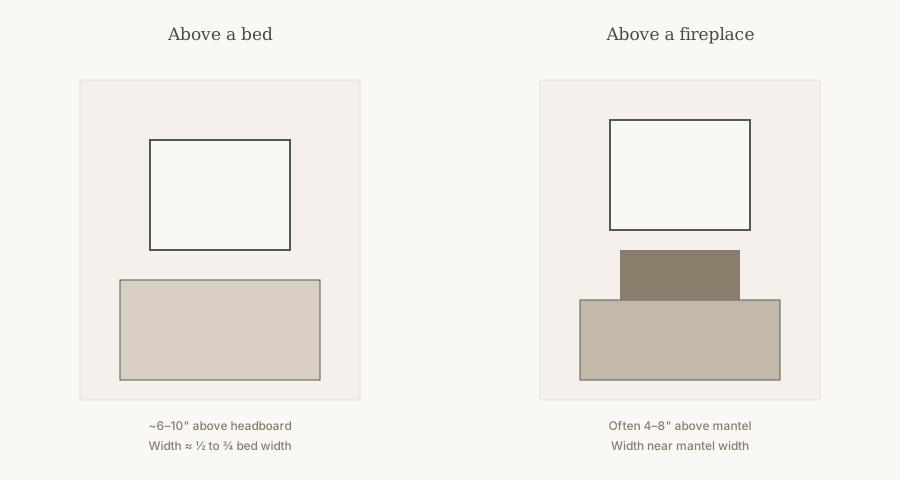
| Gap above headboard | About 6–10 inches |
| Width | About ½ to ¾ of the bed or headboard width |
| Style | One large piece, a diptych, or a tight three-piece set |
Avoid: Tiny art centered on a king headboard, or frames so low they get bumped by pillows.
Wall art above a fireplace
Mantels change the rule slightly because furniture height is fixed and often taller.
| Guideline | Starting point |
|---|---|
| Gap above mantel | Often 4–8 inches (tighter than sofa gaps) |
| Width | Near the mantel width, or slightly less |
| Lean vs hang | Large art can lean on the mantel in informal rooms |
Watch heat and scale: Keep safe clearances for functioning fireplaces and avoid oversized pieces that feel top-heavy on a narrow shelf.
Wall art in a dining room
Dining art should feel connected to the table zone, not floating randomly on the largest empty wall.
- Center on the table or sideboard below when possible
- Use the 57–60 inch center for art on open walls
- Above a buffet, use the 6–10 inch furniture gap
- Coordinate scale with dining rug size so floor and wall anchors agree
Wall art in hallways
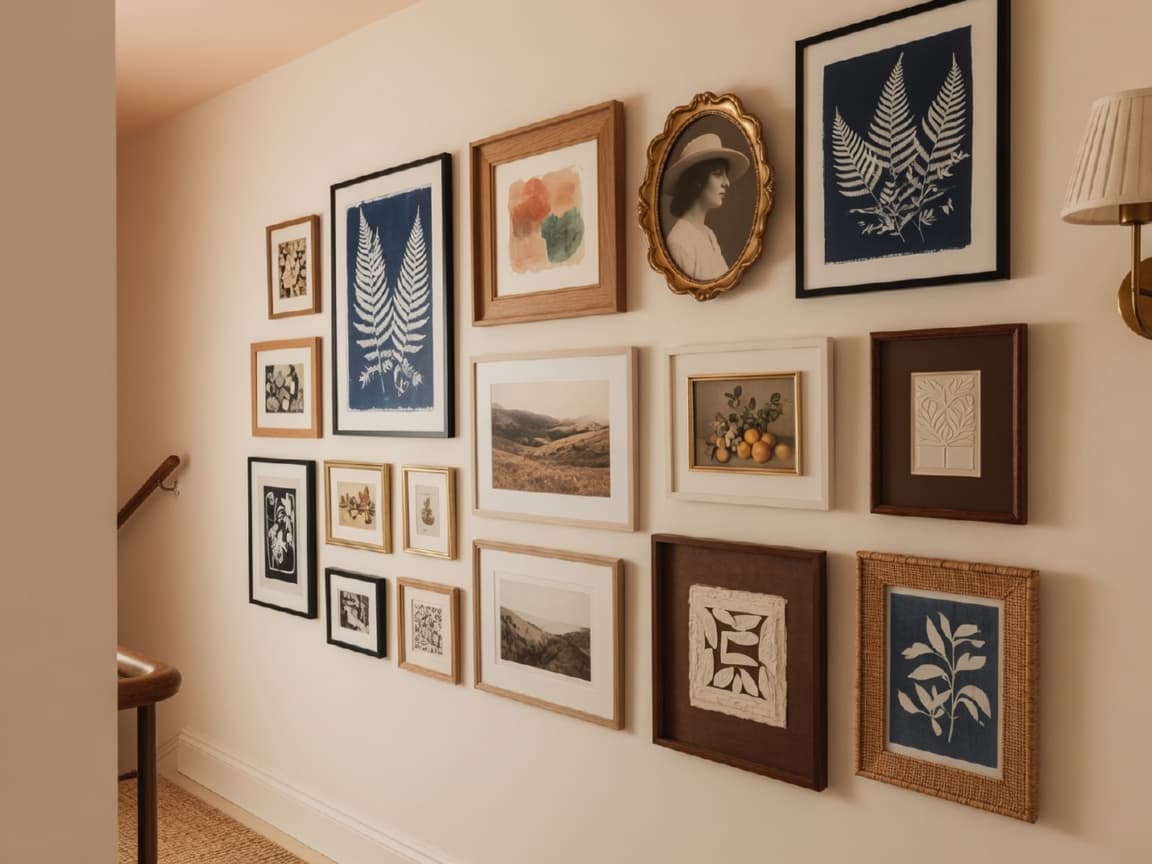
Hallways are perfect for series and photography grids.
- Keep centers near 57–60 inches so walking views feel natural
- Maintain even gaps (2–3 inches) in grids
- Leave breathing room from door casings and corners
- Use consistent frames for a calmer corridor
Entryway artwork
The entry sets the first impression.
- One strong piece or a small, ordered group
- Center near eye level as you stand in the door
- Pair with a console, mirror, or lamp so art is not the only vertical element
- Keep scale generous enough to read from the doorway
Staircase gallery walls
Stairs need a path that follows the rise, not a flat living-room grid forced on a diagonal.
Approach:
- Establish a centerline that roughly follows the stair angle.
- Keep even gaps between frames.
- Vary sizes but keep outer edges feeling intentional.
- Step back from the bottom and top of the stair to check the flow.
Avoid: Hanging every piece at 57 inches on a stair wall (the line will look like a broken fence).
Gallery wall spacing rules
| Rule | Guidance |
|---|---|
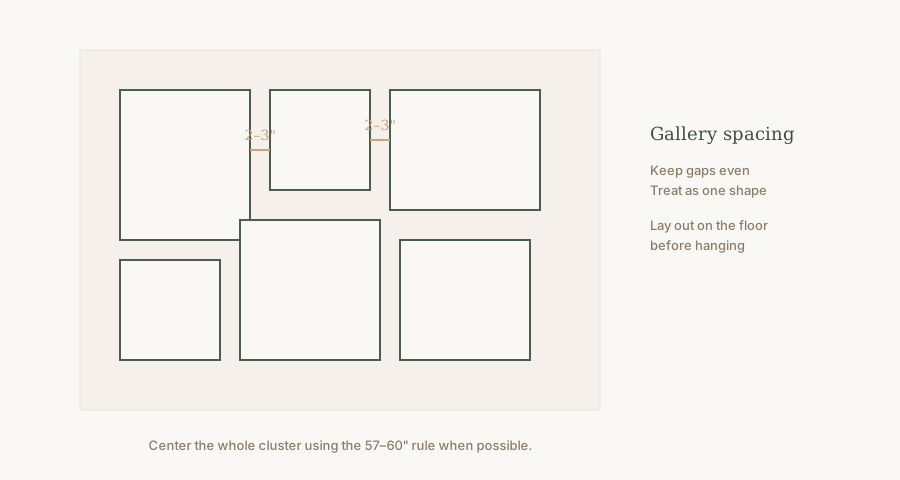
| Gap between frames | About 2–3 inches, kept consistent |
| Overall shape | Treat as one large rectangle or organic cluster |
| Center height | Center of the group near 57–60 inches when on a flat wall |
| Planning | Lay out on the floor; photograph; use paper templates |
Frame spacing guidelines (quick reference)
- Tight gallery: ~2" gaps for a collected, dense look
- Standard gallery: ~2–3" gaps for most homes
- Airy arrangement: up to ~4–5" only when frames are large and few
- Mismatched frames: more consistent spacing and mats calm the mix
Choosing the correct artwork size
Size is as important as height.
Relative to furniture: aim for about two-thirds to three-quarters the width of the piece below (sofa, console, sideboard).
Relative to wall: leave margin so art is not edge-to-edge unless you intend a mural effect.
Relative to viewing distance: larger walls and longer sight lines support larger works.
Matching artwork to furniture scale
| Furniture | Art scale cue |
|---|---|
| Sofa 84" wide | Art or group about 56–63" wide |
| Queen headboard | Often one strong piece or pair spanning roughly half to three-quarters |
| Narrow console | Vertical piece or stacked pair; avoid tiny center stamp |
| Wide media unit | Wider landscape or multi-panel set |
When furniture scale is already wrong (tiny rug, low curtains), fix those foundations too. See our guides on rug size and curtain height.
Common wall art mistakes
- Hanging from the top of the frame instead of centering at 57–60"
- Tiny art over a large sofa
- Uneven gallery gaps
- Starting a gallery too high because the first nail was high
- Ignoring wire slack
- Overfilling a wall with many small unrelated pieces
- No relationship to furniture below
Small apartment wall art tips
- Prefer fewer, larger pieces over many tiny ones
- Use vertical works to emphasize height
- Lean art on shelves when nails are limited
- Keep gallery clusters tight so walls do not feel busy
Rental-friendly hanging solutions
- Rated picture-hanging strips for lighter frames (follow weight limits)
- Rail systems or existing picture moldings
- Leaning art on consoles and mantels
- Always follow your lease and patch carefully when you move
For more damage-conscious decorating ideas, explore the Renter-Friendly Home Decor Guide.
Step-by-step measuring guide
- Measure floor to 57–60 inches and mark the target center.
- Measure furniture width and height.
- Choose art width ≈ ⅔–¾ of furniture width when hanging above it.
- Set 6–10 inch gap above sofas and beds (4–8 inches above many mantels).
- For galleries, map 2–3 inch gaps on the floor first.
- Transfer the layout with paper templates.
- Hang, level, and recheck from sitting and standing positions.
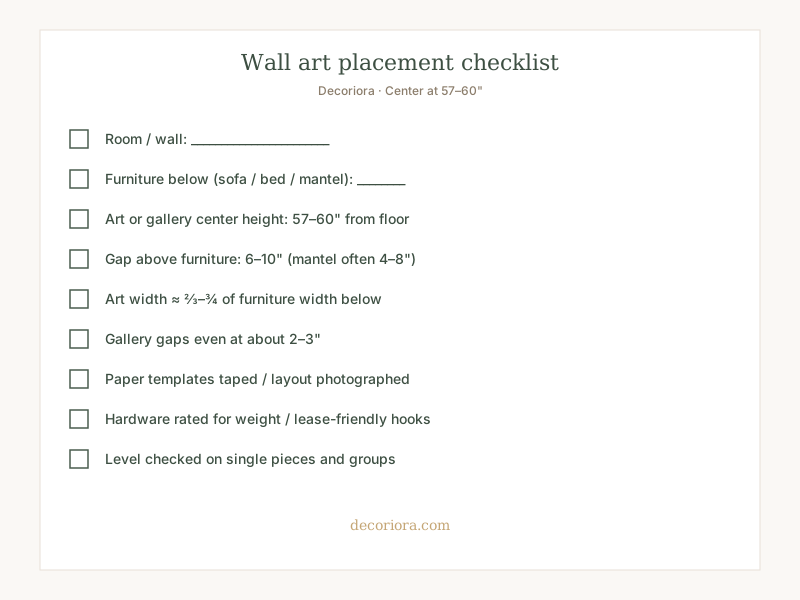
Printable wall art placement checklist
Frequently asked questions
How high should you hang wall art?
Hang artwork so the center of the piece or gallery arrangement sits about 57 to 60 inches from the floor. Above furniture, also leave about 6 to 10 inches between the furniture top and the bottom of the frame.
What is the 57-inch rule for hanging art?
The 57-inch rule means centering artwork so its visual midpoint is about 57 inches from the floor. Many designers use a 57 to 60 inch range. Apply it to a single piece or to the center of a gallery group.
How much space should be between art and a sofa?
Leave about 6 to 10 inches between the top of the sofa back and the bottom of the artwork. Size the art so it spans roughly two-thirds to three-quarters of the sofa width.
How far apart should gallery wall frames be?
Keep gaps even, usually about 2 to 3 inches between frames. Treat the whole arrangement as one large shape and center that shape using the 57 to 60 inch rule when possible.
How large should artwork be above a bed or fireplace?
Above a bed, aim for art about one-half to three-quarters the width of the headboard or bed, with about 6 to 10 inches above the headboard. Above a mantel, art often sits 4 to 8 inches above the shelf and near the mantel width.
Placement is a design skill you can measure
Correct height, scale, and spacing make art feel inevitable instead of temporary. Once pictures sit at the right center line and relate to furniture below, rooms look more expensive without new sofas or paint.
For more proportion and placement context, read 17 home decorating mistakes. Warm, collected styling formulas live in Anthropologie-inspired home styling.
From Our Collection
Anthropologie Inspired Home Without Overspending
Art height is one high-impact piece of a collected room. Get a room-by-room styling system for warm, elegant spaces on a real budget.
Measure to the center, respect the furniture gap, keep gallery spacing even, and size art to what sits below it. Your walls will look calmer, and your rooms will look finished.