What Size Rug Do I Need? The Complete Room-by-Room Rug Size Guide
Choose the right rug size for living rooms, bedrooms, dining rooms, entries, and more with designer measurements, standard US sizes, placement rules, and a printable checklist.
If you have ever bought a rug that looked perfect online and tiny on your floor, you already know the truth: rug size is one of the easiest decorating mistakes to make and one of the fastest to fix for a polished room.
The right rug anchors furniture, softens acoustics, defines zones, and makes a space feel larger and more intentional. The wrong size isolates a coffee table, crowds a bed, or catches dining chairs every time someone sits down.
This room-by-room rug size guide answers what size rug do I need with standard US dimensions, designer placement rules, and clear buying advice for living rooms, bedrooms, dining rooms, entries, apartments, and more.
Why rug size matters
A rug is not only decoration. It is the visual foundation of a seating group, sleeping zone, or dining area. Scale is what people notice first, even if they cannot name it.
When the rug is too small:
- Furniture looks disconnected
- The room feels temporary
- Corners of seating “float” on hard floor
- The space can look cheaper and less finished
When the rug is the right size:
- The layout reads as one composed zone
- Traffic paths feel intentional
- Bare feet land on soft surface beside the bed or sofa
- The room photographs and feels more professional
Rug size is also one of the home decorating mistakes that make a home look cheap. Fixing scale often matters more than buying a more expensive pattern.
Standard US rug sizes explained
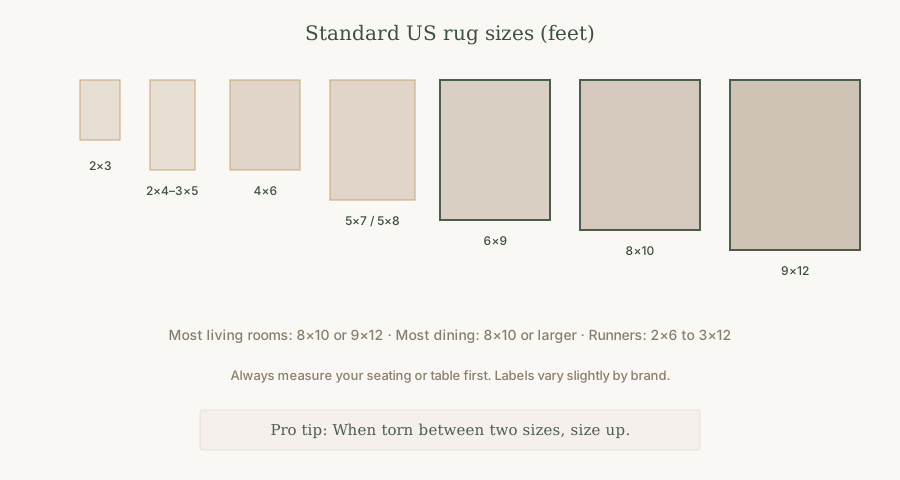
American retailers typically sell rugs in these common sizes (dimensions in feet):
| Size | Common use |
|---|---|
| 2×3 | Door mats, small accents |
| 2×6 to 3×12 | Hallway runners |
| 4×6 | Small nooks, tight bedrooms |
| 5×7 or 5×8 | Small seating pairs, small bedrooms |
| 6×9 | Compact living rooms, queen bedrooms |
| 8×10 | Most living rooms, dining, queen/king beds |
| 9×12 | Larger living rooms, king beds, large dining |
| 10×14 and up | Open plans and large rooms |
Labels can vary by brand by an inch or two. Always check the exact product dimensions, not only the marketing name.
Living room rug size guide
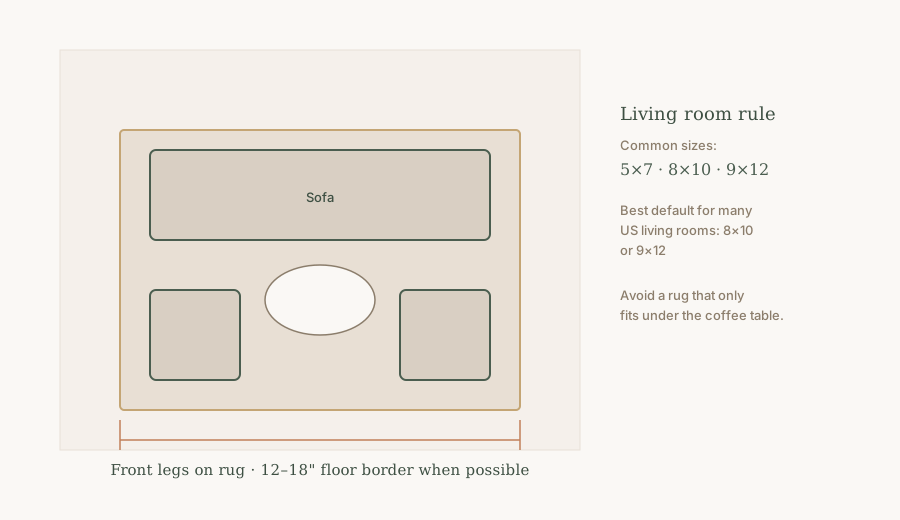
Primary goal: The rug should unify the conversation area, not only sit under the coffee table.
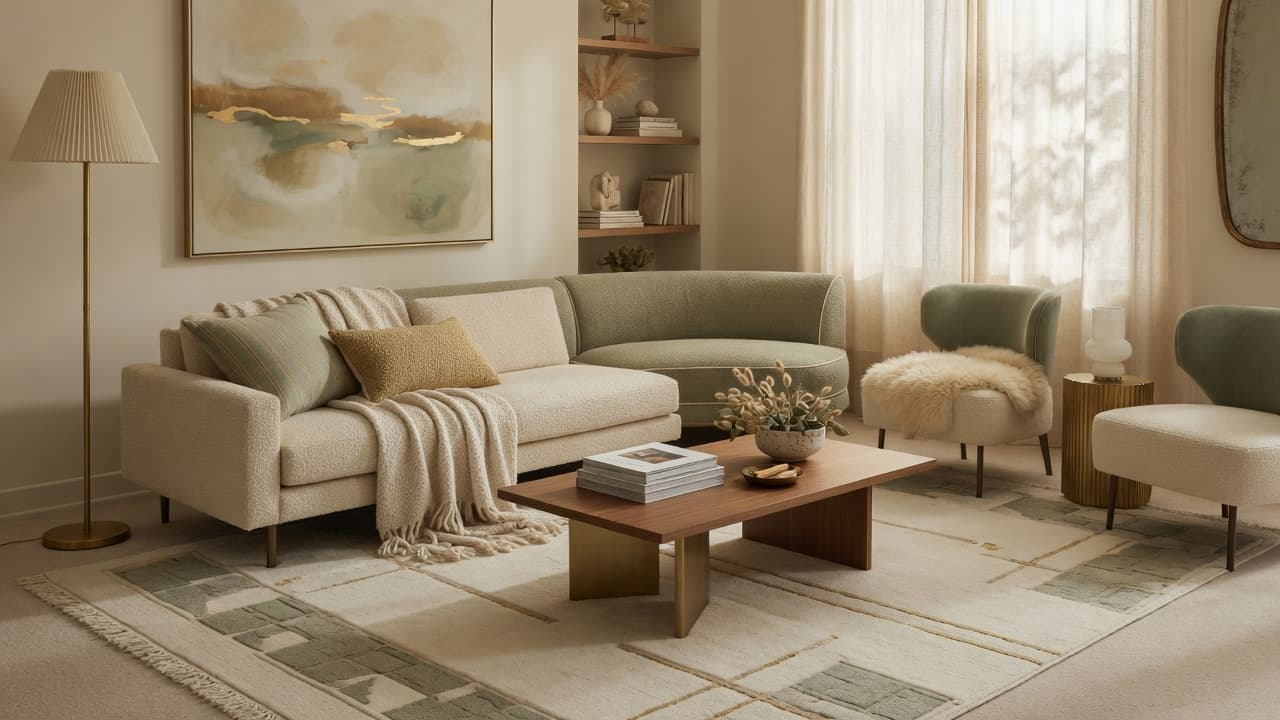
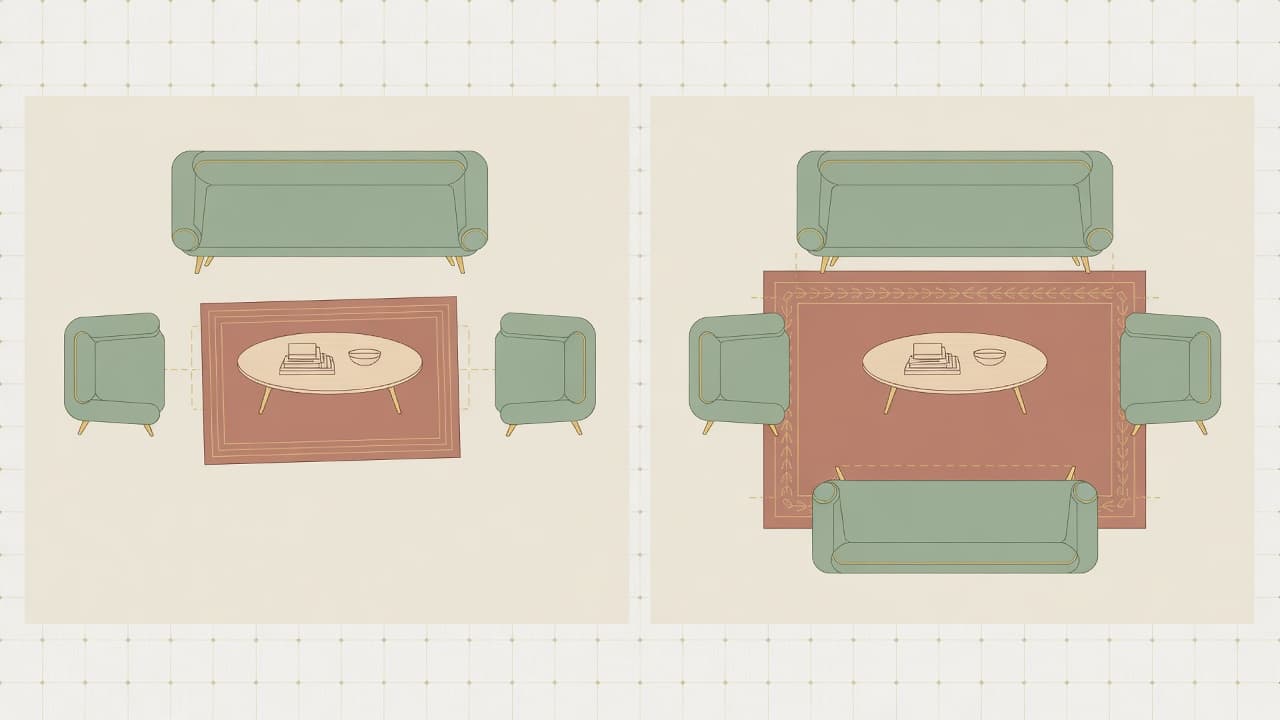
Designer rule: Front legs of the sofa and chairs rest on the rug. In generous rooms, all legs can sit on the rug.
Clearance: Aim for about 12 to 18 inches of bare floor between the rug edge and walls when the layout allows.
Common sizes:
- Small living room: often 6×9 or 8×10
- Average living room: 8×10 or 9×12
- Large living room: 9×12 or larger sectional layouts
How to decide:
- Measure the seating group, not only the room.
- Sketch or tape the rug outline on the floor.
- Confirm front legs land on the rug.
- Leave walkways of about 30 to 36 inches where people pass.
Small living room rug guide
In compact rooms, people default to 5×7 and under-scale the whole seating group.
Better approach:
- Prefer 8×10 if it still leaves a slim floor border
- Or 6×9 with front legs on and a lighter visual weight
- Float furniture slightly and let the rug define the zone
Avoid: A rug that only fits under the coffee table with sofa and chairs completely off.
Large living room rug guide
Large rooms need enough rug so seating does not feel like islands in a sea of floor.
Better approach:
- Start at 9×12
- For sectionals, measure the full footprint and size so major sections share the same rug
- In very large rooms, use one large rug for the main conversation set rather than multiple tiny ones
Budget note: A large solid or subtle texture often looks calmer than a busy small pattern.
Bedroom rug size guide
Primary goal: Soft landings beside the bed and a finished frame under the bed.
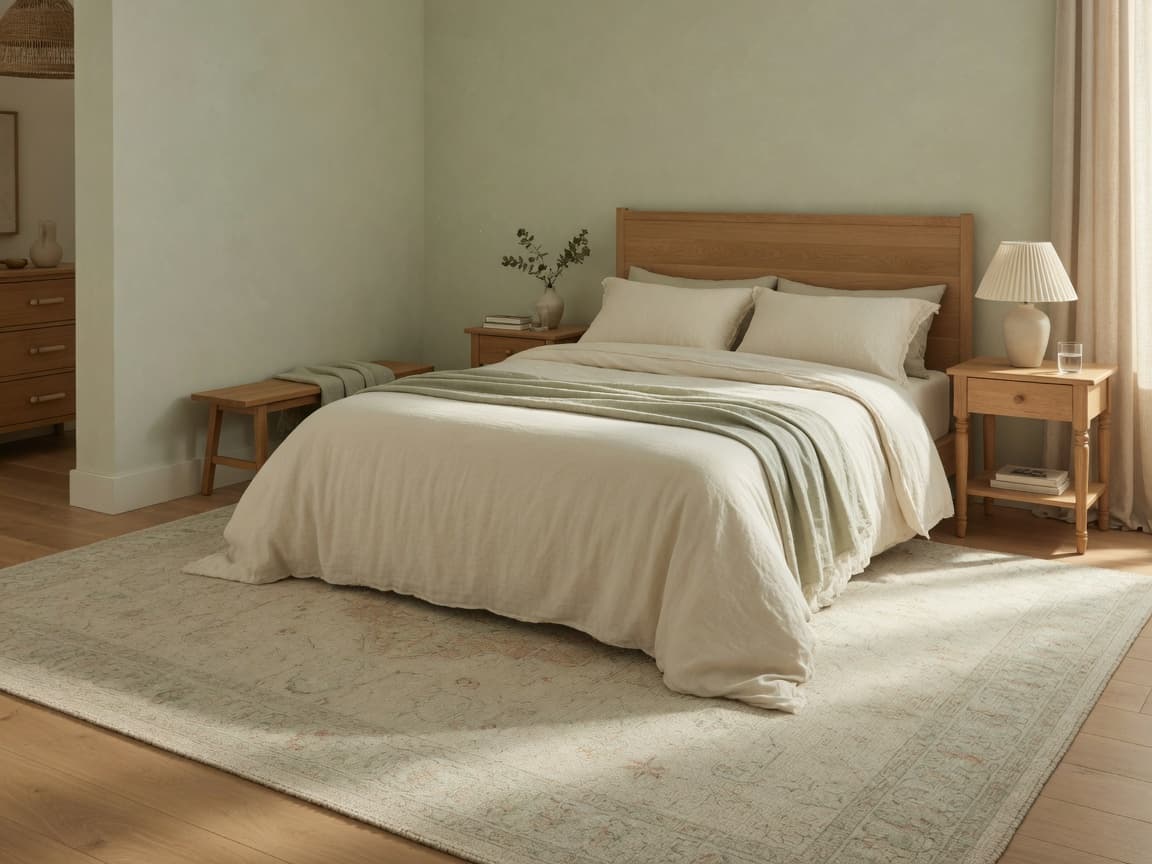
Designer rule: More rug at the sides and foot than deep under the headboard wall. Nightstands can sit off the rug.
Queen bed rug sizing
Common strong options:
- 8×10 under and beyond the foot of a queen bed
- 6×9 in smaller rooms if you still get soft side landings
- Two runners along each side if a large rug will not fit
Placement tip: Center the rug on the bed width, not necessarily on the whole room if the bed is offset.
King bed rug sizing
Common strong options:
- 9×12 for balanced borders on a king
- 8×10 only if the room is tight and you accept less side show
- Avoid tiny 5×7 islands that stop under the nightstand gap
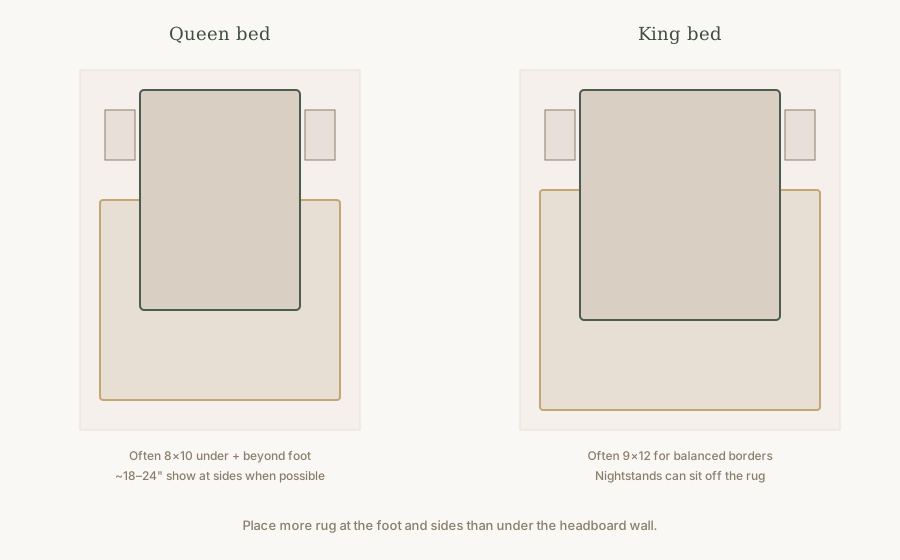
Quick takeaway: If bare feet hit cold floor the moment you stand up, the rug is too small or too centered under the mattress only.
Dining room rug sizing
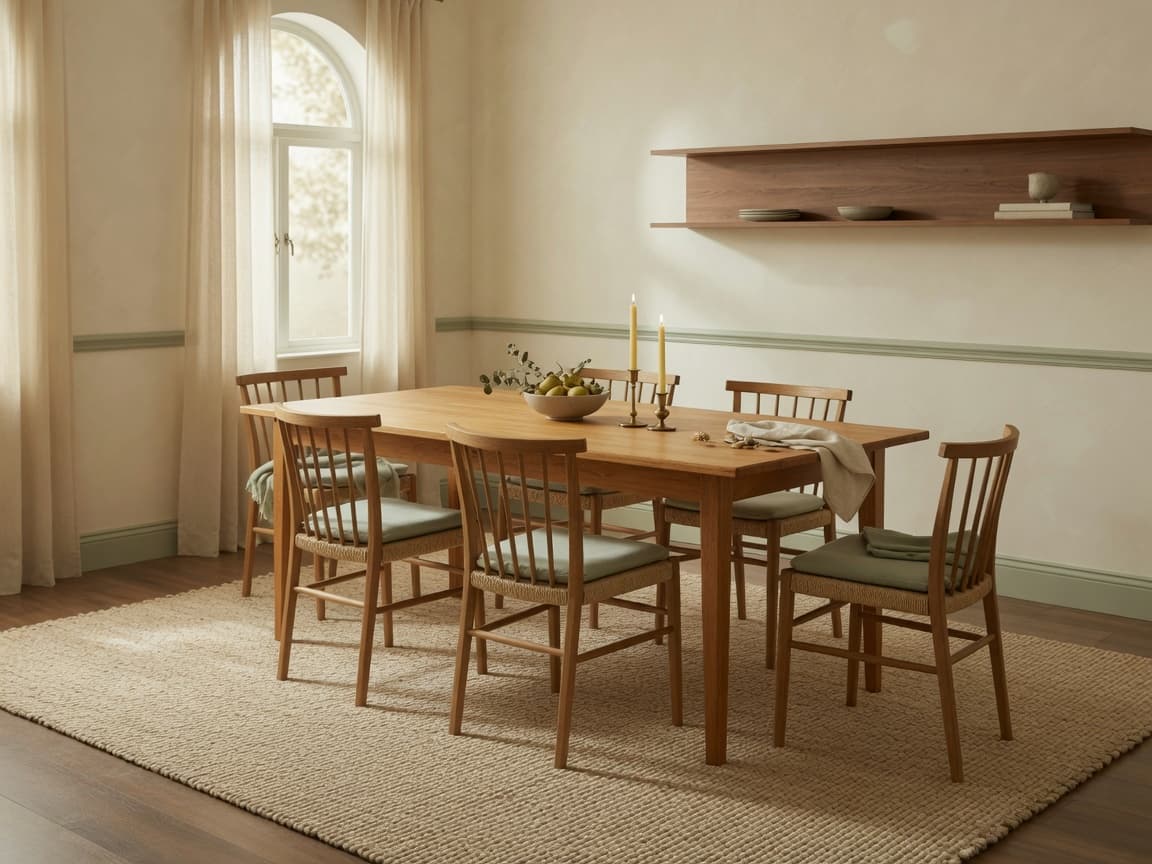
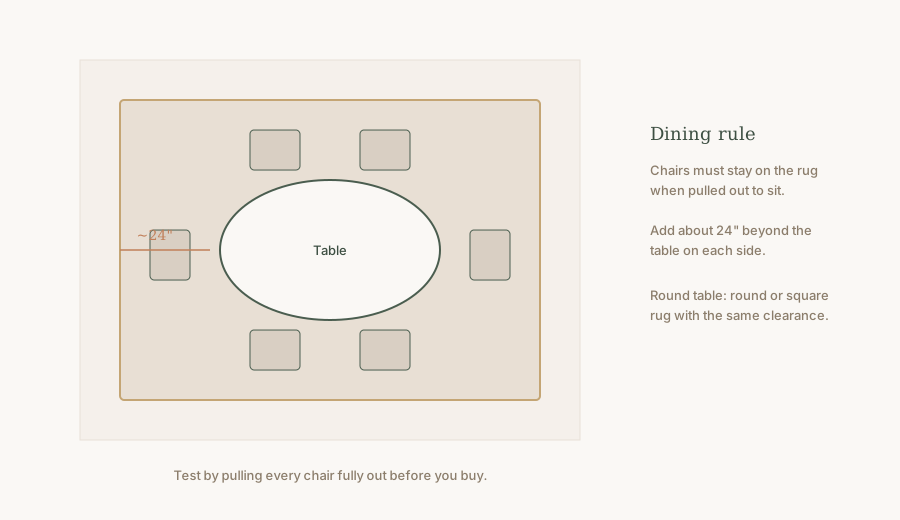
Primary goal: Chairs stay fully on the rug when pulled out.
Designer rule: Add about 24 inches of rug beyond the table on each side as a starting point. Test with your actual chairs.
Common sizes:
- 4-seat table: often 6×9 or 8×10
- 6-seat rectangular: often 8×10 or 9×12
- Larger tables: size up until pull-out still stays on the rug
Round dining table rug sizing
Round tables work with round or square rugs. Keep the same pull-out rule: every chair should remain on the rug when someone sits.
Tip: Square rugs under round tables can look architectural and are easier to source in large sizes. Match the visual weight of the table diameter plus clearance, not only the tabletop alone.
Entryway rug guide
Entries need durability and correct scale more than pattern drama.
Guidelines:
- Leave a frame of floor around the rug so it does not look wall-to-wall by accident
- Size long enough for at least two steps if space allows
- Keep clear of door swing (test the door fully open)
Common sizes: 3×5, 4×6, or a runner depending on the foyer shape.
Hallway runner guide
Guidelines:
- Leave 4 to 6 inches of floor on each long side when possible
- Leave a few inches at each end so the runner does not crowd door thresholds
- Common runners: 2×6, 2×8, 3×10, 3×12
Avoid: A runner so wide it becomes a trip edge against baseboards, or so short it looks like a bath mat in a corridor.
Home office rug guide
Under a desk chair, prioritize chair movement.
Options:
- Hard-surface-friendly low pile under the full desk and chair zone
- Chair mat on top of a larger soft rug if you need both comfort and roll
- Size so the chair stays on the rug when pulled back from the desk
Common sizes: 5×7 or 6×9 for many desks; size up for L-shaped setups.
Nursery rug guide
Choose soft, cleanable materials and soft edges.
Guidelines:
- Cover the main play zone in front of seating or crib area
- Avoid thick high-pile that traps crumbs if little ones snack on the floor
- Round rugs can soften a rectangular room
Safety: Secure with a quality pad. Avoid loose corners.
Outdoor rug sizing
Outdoor rugs follow the same scale rules as indoor seating and dining.
Guidelines:
- Front legs of outdoor seating on the rug
- Dining chairs stay on when pulled out
- Leave drainage and airflow in mind for material choice
- Measure the patio furniture footprint the same way you measure a living room
Apartment rug guide
Renters and apartment dwellers often fear large rugs. In practice, a larger low-profile rug can make a studio feel calmer, not smaller.
Tips:
- Use one well-scaled rug to define the living zone
- Choose washable or indoor-outdoor options for high traffic
- Keep a consistent color story with flooring so the room feels continuous
- Confirm building rules for outdoor balconies if needed
Open-concept room rug placement
Open plans need rugs to define zones, not one tiny mat in the middle of everything.
Approach:
- Living seating gets one large rug (8×10 or 9×12 typical).
- Dining gets its own correctly sized rug with chair clearance.
- Leave a path of flooring between zones so the plan still breathes.
- Coordinate colors so rugs feel related without matching exactly.
Avoid: Multiple small unrelated rugs that chop the floor into islands.
Common rug sizing mistakes
- Rug only under the coffee table
- Dining rug too small for chair pull-out
- Bedroom rug that stops before your feet land
- Runner too short for the hallway
- Buying from a photo without measuring furniture
- Ignoring door clearances and floor vents
- Choosing pattern before scale
Many of these appear in broader styling errors too. For a fuller list of proportion and placement problems beyond rugs, see our guide to 17 home decorating mistakes and the deeper Home Decorating Mistakes Guide.
Rug placement rules designers use
- Living: Front legs on (or all legs on if the rug is large enough).
- Dining: All chair legs on when seated and when pulled out.
- Bedroom: Soft landings at sides and foot; nightstands optional off-rug.
- Borders: Leave a frame of floor so the rug looks intentional, not accidental wall-to-wall.
- Layers: A small hide or textured layer can sit on a larger neutral base only if the base size is already correct.
Furniture placement on rugs
Furniture and rug decisions go together.
- Place the rug first with painter tape.
- Set the largest piece (sofa or bed).
- Pull seating into conversation distance (often about 4 to 8 feet between facing seats, adjusted to your room).
- Leave 14 to 18 inches between sofa edge and coffee table when possible.
- Recheck that front legs still sit on the rug after the final arrangement.
Warm, collected rooms also rely on texture and light once scale is right. For room formulas that build on good foundations, explore Anthropologie-inspired home styling without overspending.
Rug material considerations (size still comes first)
Material does not fix a wrong size, but it affects how a large rug lives day to day.
- Wool: Durable, soft, classic for living rooms
- Cotton / washable blends: Practical for dining and kids zones
- Jute / sisal: Natural look; can feel firm underfoot
- Synthetics: Often budget-friendly and stain-resistant
- Outdoor fibers: Good for covered patios and tough traffic
Choose fiber after you lock dimensions.
Rug pad recommendations
A pad protects floors, reduces slipping, and makes a rug feel thicker.
Guidelines:
- Size the pad about 1 inch smaller on each side than the rug so it does not peek out
- Use felt-rubber combinations on hard floors when appropriate
- Replace pads that have crumbled or lost grip
How to measure your room correctly
- Clear the zone enough to move a tape measure freely.
- Measure room width and length, then the furniture group separately.
- Note door swings, vents, and radiator clearances.
- Tape the proposed rug outline and live with it for a day if you can.
- Photograph the tape outline from standing height to check scale.
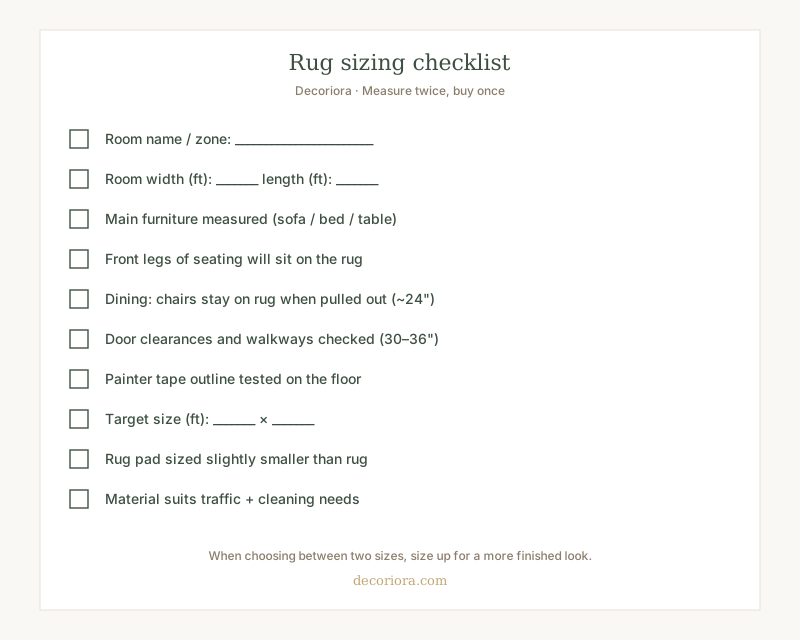
Printable rug sizing checklist
Use this checklist before you order.
Frequently asked questions
What size rug do I need for a living room?
Most living rooms look best with an 8×10 or 9×12 rug sized so the front legs of the sofa and chairs sit on the rug, with about 12 to 18 inches of floor around the seating group when space allows. Avoid a rug that fits only under the coffee table.
What size rug goes under a king bed?
A 9×12 is a common choice under a king so you get balanced side and foot borders. Place more of the rug toward the foot of the bed rather than deep under the headboard wall. Nightstands can sit off the rug.
What size rug goes under a queen bed?
An 8×10 often works well under a queen, with fabric showing along the sides and beyond the foot. In smaller rooms, a 6×9 can work if you still get soft landings beside the bed.
What size rug for a dining table?
Choose a rug large enough that chairs stay fully on the rug when pulled out, typically about 24 inches of rug beyond the table on each side. Many rectangular tables pair with an 8×10 or larger.
Should the front legs of furniture sit on the rug?
In living rooms, yes for the main seating group when possible. Front legs on the rug unify the conversation area. All legs on the rug also works in larger rooms if the rug is big enough.
Choosing size is the first professional decision
Once the rug is correctly sized, color, pattern, and material can support the mood of the room. If scale is wrong, no pattern will fully save the layout.
Correct rug size is one high-impact piece of a finished home. For more proportion and placement context, read 17 home decorating mistakes that make your home look cheap. For room-by-room formulas that build on good scale, explore Anthropologie Inspired Home Without Overspending.
From Our Collection
Anthropologie Inspired Home Without Overspending
Once rug scale is right, texture, light, and layering finish the room. Get a room-by-room system for a warm, collected home without overspending.
Measure the furniture, tape the floor, and size up when you are unsure. The right rug does not shout. It quietly makes everything else look like it belongs.