How High Should Curtains Be Hung? Interior Designer Rules for Every Room
Learn how high to hang curtains, where to place the rod, how wide rods should extend, which curtain length to buy, and how to make windows look taller with designer measurements for every room.
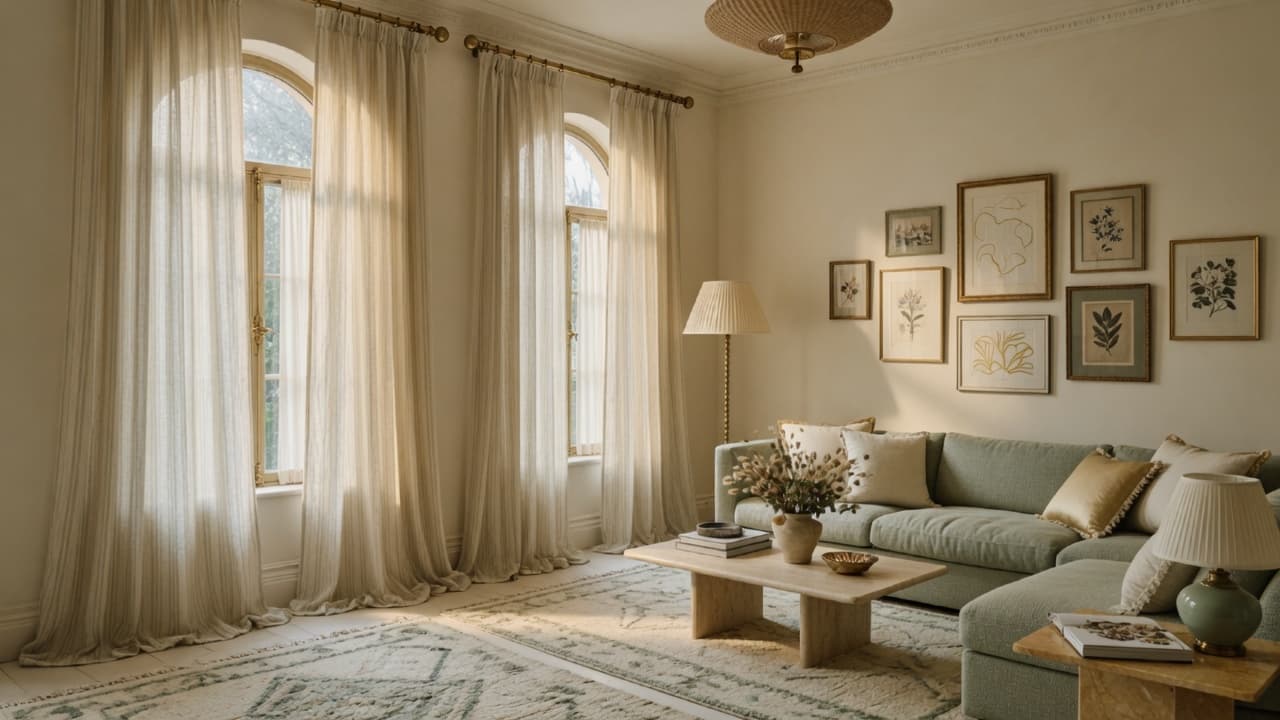
If you want one upgrade that instantly makes a room look taller, brighter, and more professionally designed, hang your curtains higher and wider than the window frame.
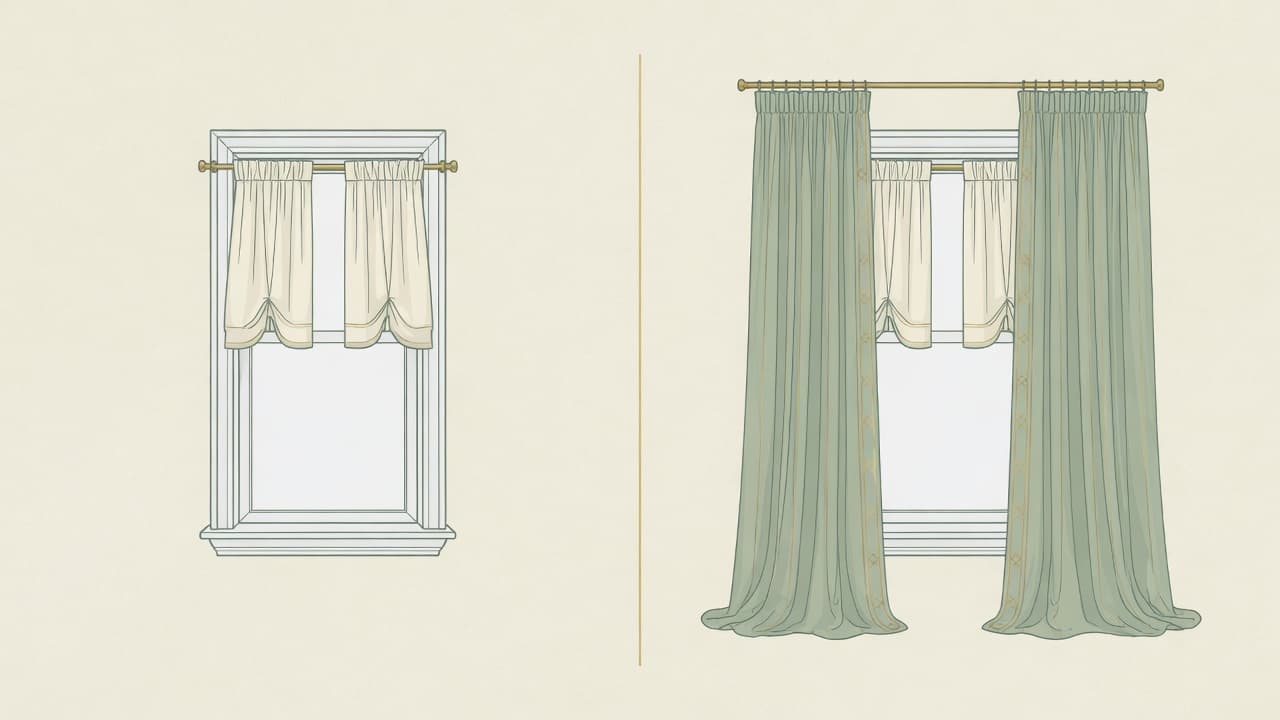
Most builder installs and many DIY jobs place the rod a few inches above the trim. That habit shrinks the wall, leaves a awkward band of paint above the drapes, and makes even good fabric look temporary. Designers treat curtains as architecture: height, width, length, and fullness work together.
This guide answers how high should curtains be hung, where the rod should sit, whether panels should touch the floor, how wide hardware should run, and how to measure before you buy for living rooms, bedrooms, dining rooms, apartments, and rentals.
Why curtain height matters
Curtains frame daylight. When they sit too low or stop at mid-window, the eye reads the room as shorter and less finished. When they rise toward the ceiling and drop to the floor, the wall gains vertical lift and the window feels more generous.
Curtain placement also ties into other scale mistakes. Low drapes often appear in the same rooms as undersized rugs and art hung too high. Fixing height is one of the fastest corrections in our home decorating mistakes guide, and it pairs well with correct rug size so both floor and window feel intentional.
The designer rule for hanging curtains
Mount high. Extend wide. Hang full-length. Order enough fullness.
In plain numbers for many US rooms:
| Decision | Designer starting point |
|---|---|
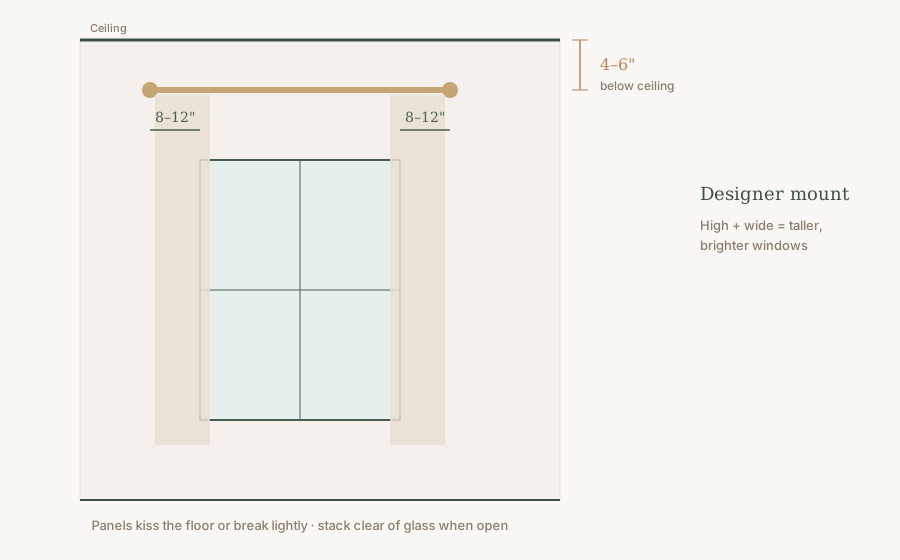
| Rod height | About 4–6 inches below the ceiling (or halfway between frame and ceiling only if ceilings are very tall) |
| Rod width | About 8–12 inches past each side of the window when space allows |
| Panel length | Kiss the floor or soft 1–3 inch break |
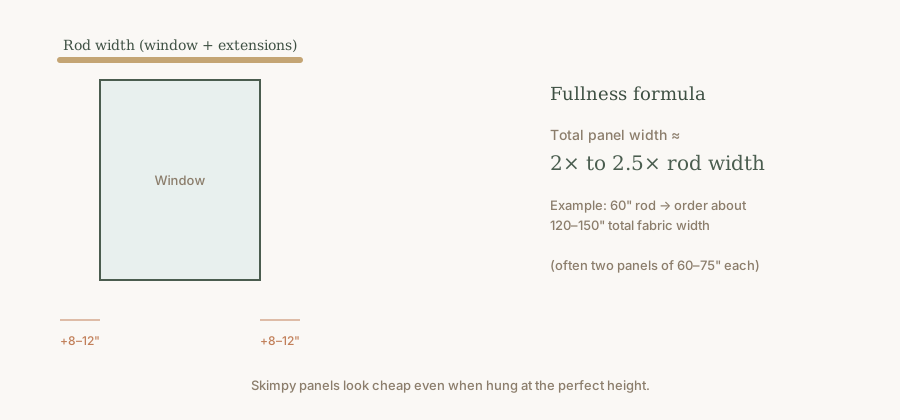
| Fullness | Total fabric width about 2× to 2.5× finished rod width |
These are professional defaults, not rigid laws. Adjust for crown molding, radiators, vents, and lease rules.
How high above the window to place the rod
Measure from the ceiling, not only from the trim.
- Note ceiling height and any crown molding.
- Aim for the rod about 4 to 6 inches below the ceiling line.
- If the gap between frame and ceiling is small, hang as high as the hardware allows without crowding molding.
- Keep both ends of the rod level. Use a laser or long level.
On very tall walls, some designers split the difference so the rod does not float awkwardly mid-wall. The goal is still noticeably higher than the frame, not flush to the trim.
Should curtains touch the floor?
For most rooms, yes. Floor contact (or a soft break) is what makes panels look custom.
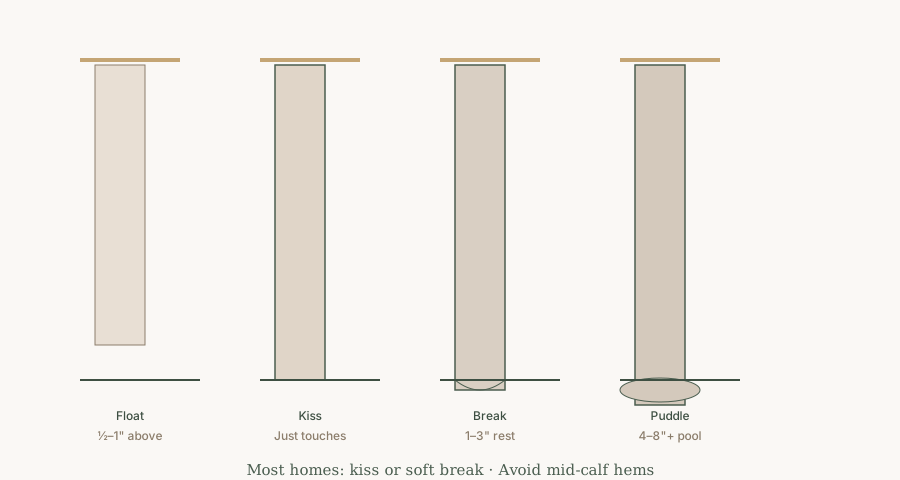
Length styles explained
| Style | Look | Best for |
|---|---|---|
| Float (½–1" above floor) | Clean, practical | High traffic, kids, pets, vacuuming ease |
| Kiss (just touches) | Tailored, modern | Living rooms, bedrooms, dining |
| Break (1–3" rests on floor) | Soft, collected | Bedrooms, formal living |
| Puddle (4–8"+ pools) | Romantic, formal | Low-traffic formal spaces |
Avoid hems that stop at the sill or mid-calf unless you are intentionally using cafe curtains on a kitchen sink window.
Curtain lengths explained (what to buy)
Retail panels are often labeled 84", 96", or 108" (and sometimes 120"). Those numbers are finished lengths, not magic sizes for every room.
How to choose:
- Decide rod height first.
- Measure from the top of the rod hardware (or ring attachment point) to the floor.
- Subtract a little for float, match for kiss, or add for break/puddle depending on header style.
- Remember grommets, rods, and rings change the finished drop. When in doubt, buy longer and hem.
Ceiling-mounted vs wall-mounted curtain rods
Wall-mounted (most common)
- Brackets on the wall above and beyond the window
- Flexible, works with most casings
- Easy to place 4–6" below ceiling
Ceiling-mounted (tracks or flush rods)
- Best for wall-to-wall drapery, sliding doors, or when you want maximum height
- Clean hotel look
- Useful in apartments with limited wall space above the frame
Choose ceiling mount when you want continuous fabric, blackout sleep caves, or a modern gallery feel. Choose wall mount for classic single windows and simpler DIY installs.
Standard US window context (why “one size” fails)
Windows vary widely: double-hung, picture, slider, bay, and French doors. Do not buy panels from a photo alone.
Typical considerations:
- Standard double-hung windows still need high rods for height
- Sliding doors often need longer rods and more fabric width
- Bay windows may need flexible tracks or multiple rods
- Always measure your opening, then apply high-and-wide rules
How wide should curtain rods extend?
Extend about 8 to 12 inches past each side of the window when furniture and walls allow.
Why width matters:
- Open panels stack off the glass, so more daylight enters
- The window looks larger
- Fabric does not permanently block part of the view
If space is tight on one side, extend as far as you can on the clear side and keep fullness generous.
Curtain fullness ratios
Height alone is not enough. Skimpy fabric still looks inexpensive.
Designer fullness: total panel width ≈ 2× to 2.5× the finished rod width.
Example: Finished rod is 60" wide → order about 120–150" of total fabric width (often two panels of 60–75" each, depending on pleat style).
Ripplefold and some tracks use different fullness. When buying ready-made grommet panels, buy more panels rather than stretching two thin ones across a wide rod.
Curtains for living rooms
Living rooms benefit most from the full formula: high rod, wide span, floor length, warm layered light beside the drapes.
- Prefer solids or quiet texture so the architecture reads first
- Pair with a correctly scaled living room rug so floor and window scale agree
- Use sheers plus heavier side panels if you want daytime glow and evening privacy
Curtains for bedrooms
Prioritize sleep and softness.
- Consider blackout or room-darkening linings
- Kiss or soft break lengths feel calm underfoot
- Wider rods help block edge light around the glass
- Warm lamps near the window stack create evening depth
Curtains for dining rooms
Dining rooms can handle slightly more formality.
- Floor-length panels frame the table zone
- Coordinate length with dining rug scale so chairs do not fight fabric puddles
- Avoid excessive puddles if crumbs and traffic are constant
Curtains for small apartments
High and wide still works in small spaces. In fact, height is one of the best free tools in a studio or one-bedroom.
- Hang as close to the ceiling as allowed
- Choose lighter colors to bounce light
- Keep patterns quiet so the room feels larger
- One continuous rod across a wall of windows can simplify the view
Curtains for rental homes
Renters can still get the look with care:
- Use proper wall anchors or studs; avoid weak drywall bites
- Ask about ceiling tracks or existing hardware
- Tension rods are limited for heavy drapes but can work for sheers on some frames
- Always follow your lease; document wall condition
For more lease-aware upgrades beyond windows, the Renter-Friendly Home Decor Guide covers damage-conscious methods room by room.
Floor-length vs puddled curtains
Floor-length (kiss/break) is the default for modern American homes: polished, easy to clean under, and compatible with heat vents when planned carefully.
Puddled lengths suit formal living rooms and photoshoots. They collect dust and are less ideal with pets or kids. If you puddle, keep traffic low and fabric washable or professionally cleaned.
Sheer curtains vs blackout curtains
| Type | Strength | Watch-outs |
|---|---|---|
| Sheer | Soft daylight, privacy by day | Night privacy needs lining or second layer |
| Semi-sheer / linen-look | Collected, warm | May need lining for shape |
| Blackout / room darkening | Sleep, media rooms | Can look heavy if skimped on width |
Many designers combine sheers for day and heavier panels for night on a double rod.
Common curtain hanging mistakes
- Rod mounted only at the top of the trim
- Panels that stop at the sill or mid-calf
- Rod the same width as the glass (no stack-back)
- Not enough fabric fullness
- Uneven rods or twisted panels
- Ignoring door swings and baseboard heaters
- Buying length before choosing rod height
These window mistakes often sit next to other scale errors covered in the Home Decorating Mistakes Guide.
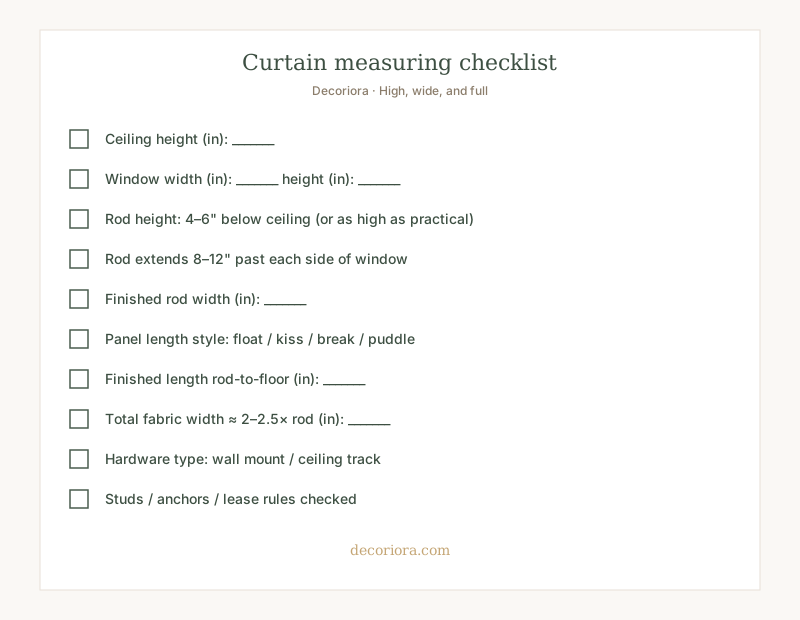
How to measure before buying curtains
- Ceiling to floor height
- Window width and height
- Desired rod height (mark lightly with pencil)
- Desired side extensions (8–12" each side when possible)
- Finished rod width (glass + extensions)
- Rod-to-floor length for panels
- Fullness total (2–2.5× rod width)
- Hardware clearance from crown, vents, and handles
Step-by-step installation guide
- Gather rod, brackets, level, tape measure, drill, anchors, and stud finder.
- Mark rod height near the ceiling (about 4–6" below).
- Mark width past the window (about 8–12" each side).
- Locate studs where possible; use rated anchors in drywall.
- Install brackets level.
- Hang rod and test panel drop.
- Steam or iron panels.
- Adjust hems or rings so both sides match.
- Open panels fully to confirm glass is clear.
Printable curtain measuring checklist
Frequently asked questions
How high should curtains be hung?
Hang the curtain rod about 4 to 6 inches below the ceiling, or as close to the ceiling as practical. Avoid mounting the rod just above the window frame, which shortens the wall and makes windows look smaller.
Should curtains touch the floor?
Yes, for most rooms. Floor-length panels that kiss the floor or break lightly by 1 to 3 inches look finished. Mid-calf hems usually look unfinished. A deeper puddle is optional and more formal.
How wide should a curtain rod be?
Extend the rod about 8 to 12 inches past each side of the window when space allows so open panels stack off the glass. That keeps more window exposed and makes the opening feel larger.
How much curtain width do I need for fullness?
Plan total panel width about two to two and a half times the finished rod width. Thin, skimpy panels can look cheap even when hung at the correct height.
Can I hang curtains high in a rental?
Often yes with care. Use appropriate anchors, tension or ceiling tracks when allowed, and always follow your lease. High rods and full-length panels still work when permanent change is limited.
Curtains are architecture you can change this weekend
Correct curtain height, width, length, and fullness make windows look larger and rooms look designed. Combine that upgrade with right-sized rugs and edited surfaces, and the whole home reads more expensive without a renovation.
For more proportion and placement fixes, explore 17 home decorating mistakes, the room-by-room rug size guide, and warm styling systems in Anthropologie-inspired home styling.
From Our Collection
Anthropologie Inspired Home Without Overspending
Curtain height is one high-impact piece of a collected room. Get a room-by-room styling system for warm, elegant spaces on a real budget.
Mount high, extend wide, hang full-length, and give the fabric enough fullness. Your windows will look larger, and your rooms will look finished.